Discovery of Ancient Maya City
Background:
- The National Institute for Anthropology and History (INAH) in Mexico led the expedition to Ocomtún.
- The research team used airborne laser scanning to identify pre-Hispanic structures throughout the region.
- Named Ocomtun, meaning “stone column” in the Yucatec Maya language, this newly discovered city is believed to have been a prominent centre in the central lowland region of the Yucatan Peninsula between 250 and 1000 AD.
- It also provides invaluable insights into the advanced societal and religious practices of the Maya civilisation, known for its sophisticated mathematical calendars.
Linkage:
- The Maya are an indigenous people of Mexico and Central America. Originating in the Yucatán, they rose to prominence around A.D. 250 in present-day southern Mexico, Guatemala, northern Belize and western Honduras.
- The rise of the Maya began about 250 CE, and what is known to archaeologists as the Classic Period of Mayan culture lasted until about 900 CE.
- The Maya civilisation was one of the most advanced and influential cultures. They developed complex systems of writing, astronomy, mathematics, art, architecture, and religion.
- They also built impressive cities with pyramids, palaces, temples, and plazas. However, many aspects of their history and culture remain mysterious and unknown.
Current Scenario:
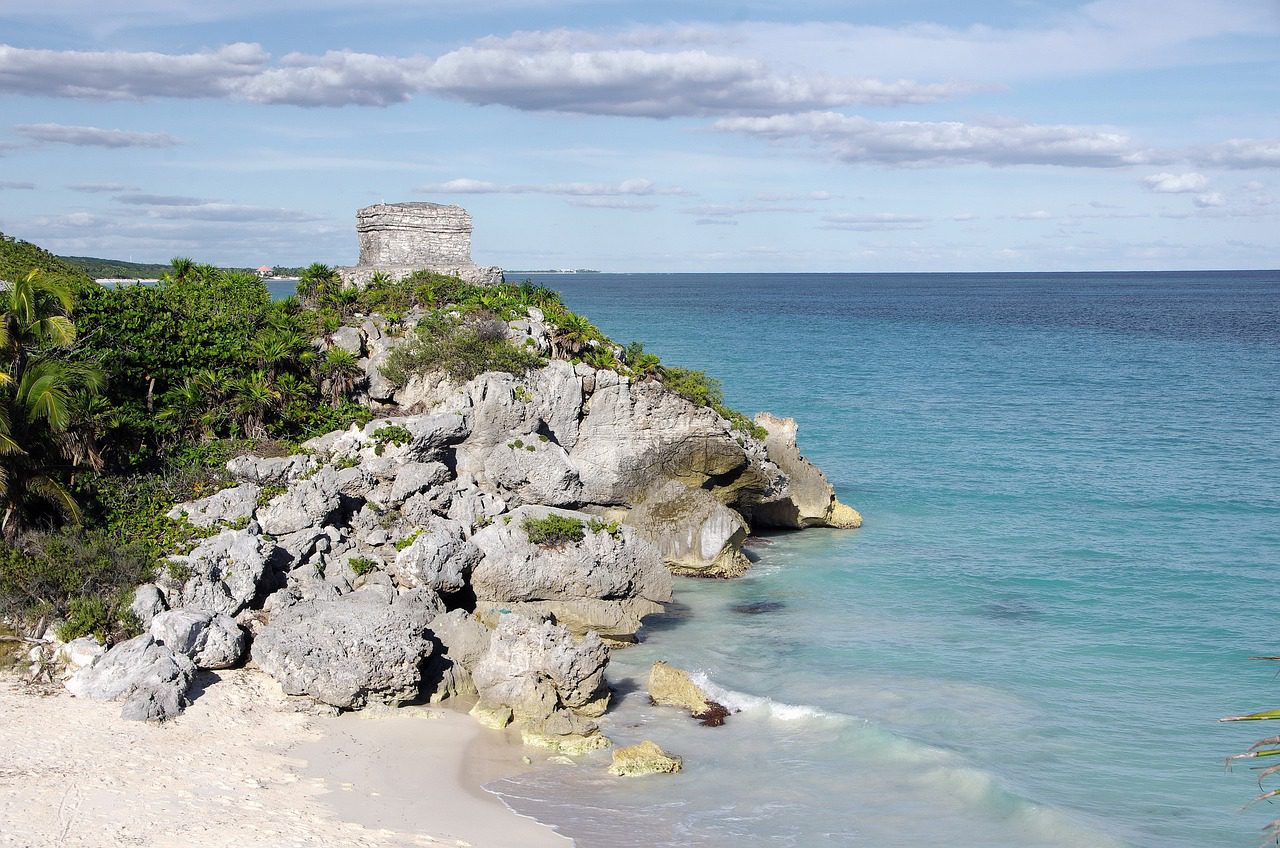
- Archaeologists in Mexico have made a significant discovery in the dense jungle of the Yucatan Peninsula, uncovering the remains of an ancient Maya city.
- One of the most surprising findings was an elevated terrain surrounded by wetlands, suggesting a unique and strategic settlement pattern.
- Pottery fragments found at the site indicate that Ocomtún was inhabited during the Late Classic period (600-900 A.D.)
- It was discovered near the La Riguena River, possibly used for community rituals. Central altars suggest the presence of community rituals, highlighting the spiritual and communal aspects of Maya life.
- Pre-Hispanic Ball Games: It was played throughout the Maya region, representing a religious practice. The game involved passing a rubber ball, symbolising the sun, through a stone hoop without using hands.
Impact:
- This period coincided with the decline and collapse of the Lowland Maya civilisation, which was marked by a decline in population, urban centres, and political instability.
- The fall of Ocomtún and other Maya cities was part of a larger regional collapse, signifying a transformative period in Maya history.