
Aswath Damodaran: India is the World’s Most Expensive Market, Valuations Unjustifiable
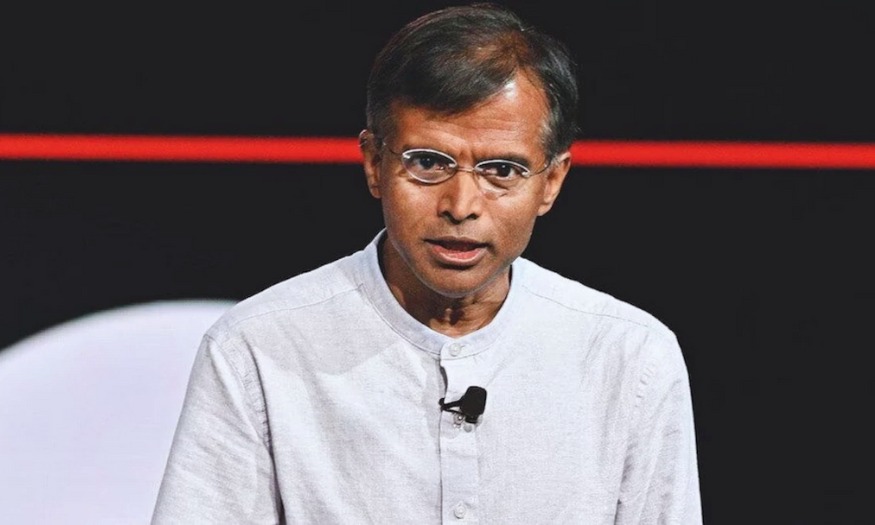
India is currently the most expensive equity market in the world, according to valuation expert Aswath Damodaran.
In a recent blog post, the New York University finance professor pointed out that no amount of optimism about India’s economic story can justify paying 31 times earnings, 3 times revenue, and 20 times EBITDA for Indian companies.
While markets like the US and China also fall into the expensive category, Damodaran highlighted that Indian equities are trading at significantly higher valuations than most global markets across all three valuation metrics.
Both the Nifty 50 and Sensex are presently around 10 percent below their all-time highs recorded on September 27, 2024.
High Valuations: Justified or a Risk?
High-growth markets like India often command a valuation premium, but Damodaran warned that such high pricing must be supported by equally strong earnings growth.
“At the wrong price, even the safest market with great historical returns are bad investments,” he cautioned.
Over the past decade, Indian equities have outperformed global benchmarks, driven by strong corporate earnings, policy reforms, and increased retail investor participation.
However, even after a cooling-off period in 2024, where price appreciation remained in single digits, valuations remain steep.
“The best-performing index in 2024, at least for the subset of indices that I looked at, was the Merval (Argentina’s benchmark), up more than 170 percent in 2024, and that European indices lagged the US in 2024,” Damodaran noted.
“The Indian and Chinese markets cooled off in 2024, posting single-digit gains in price appreciation.”
Global Economic Factors at Play
Damodaran emphasized the role of macroeconomic factors such as the strengthening US dollar, which rose by 9.03 percent in 2024, and persistent inflation expectations that continue to shape global risk-free rates.
These elements, he argued, add further complexity to the outlook for emerging markets like India.
Beyond valuations, broader geopolitical risks—including rising nationalism and trade conflicts—have reshaped the investment landscape.
“Trade wars (and tariffs) will make the world collectively less well off, but like all global shocks, they will create winners and losers,” he remarked on X, formerly Twitter.
How Does India Compare to Other Markets?
Global market capitalization rose 12.17 percent in 2024, largely due to the strength of US equities.
According to Damodaran, this continues a two-decade-long trend in which global diversification has failed to outperform a US-focused investment strategy.
In his analysis, Latin America and Eastern Europe remain among the cheapest regions for investment, although they come with considerable risks.
Meanwhile, Japan, another relatively inexpensive market, faces structural challenges such as an aging population and low economic growth.
India has been one of the worst-performing markets in 2025, yet Damodaran believes that its stocks remain the most expensive globally, despite its reputation as one of the fastest-growing economies.
Interestingly, China’s Shanghai Composite Index has outperformed India’s Sensex so far this year.
A Warning for Investors
“The most expensive market in the world is India, and no amount of handwaving about the India story can justify paying 31 times earnings, 3 times revenue, and 20 times EBITDA, in the aggregate, for Indian companies,” Damodaran wrote in his recent blog post.
He emphasized that despite India’s rapid economic growth, its market valuations are significantly higher than those of most other global markets.
When comparing India to other regions, Damodaran observed that some of the cheapest markets, such as Latin America and Eastern Europe, come with risks like political instability and sluggish economic growth.
Japan, while often considered a low-growth economy, also faces challenges due to its aging population.
Is India’s Premium Sustainable?
Despite India’s rapid economic expansion and strong corporate performance, Damodaran’s thesis is reflected in the returns from blue-chip stocks across different countries in 2025.
While India’s price-to-earnings (P/E) ratios remain high, other regions present lower valuation multiples.
Damodaran also cautioned that expensive valuations are not unique to India. Some Middle Eastern markets, for example, appear costly due to a market composition dominated by financial service firms, which often report minimal revenues.
Meanwhile, some regions, such as Japan and South Korea, appear undervalued based on enterprise value-to-sales metrics, though they are not without economic challenges.
Proceed with Caution
India’s equity market has long attracted global investors due to its economic growth and strong corporate performance.
However, Aswath Damodaran’s analysis suggests that the current valuations are excessive, making India a potentially risky bet for investors.
While India remains an exciting market, Damodaran’s perspective serves as a reminder that valuation matters.
Investors should weigh their options carefully, considering the risks associated with India’s high price-to-earnings ratios before making investment decisions.