
Pakistan Sought Ceasefire After Indian Strikes on Air Bases During Operation Sindoor, Reveals Ishaq Dar
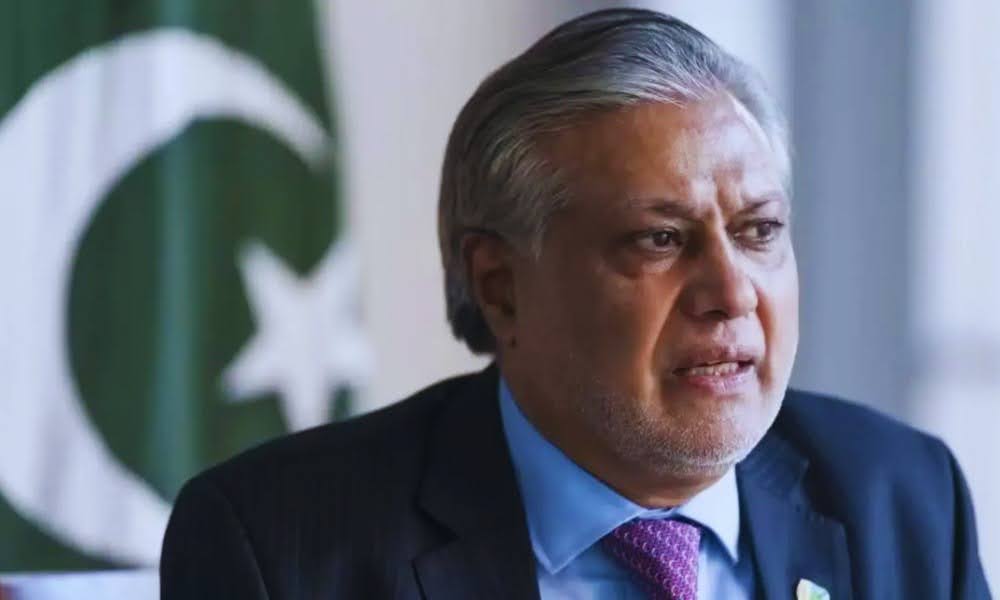
Pakistan’s Deputy Prime Minister Ishaq Dar has publicly acknowledged that Islamabad was forced to request a ceasefire from India following missile strikes on two of its major air bases by the Indian armed forces.
These attacks were part of India’s Operation Sindoor, launched in retaliation for the Pahalgam terror attack in Jammu and Kashmir, which claimed 26 lives.
Indian Strikes on Key Pakistani Air Bases
In a recent television interview that has gone viral, Ishaq Dar confirmed that India targeted the Nur Khan Air Base in Rawalpindi and the Shorkot Air Base, known as PAF Base Rafiqui, located in Punjab province.
The Nur Khan facility is regarded as one of Pakistan’s most sensitive military compounds, responsible for both air force operations and VIP transport.
“Unfortunately, India once again launched missile strikes at 2:30 am. They attacked the Nur Khan Air Base and Shorkot Air Base,” Dar stated during the interview.
He further explained that shortly after the strikes, Saudi Arabia’s Prince Faisal contacted him, having learned of Dar’s earlier conversation with US Secretary of State Marco Rubio.
“He asked if he was authorised to talk to (India’s External Affairs Minister) S Jaishankar and convey that we are ready if they (India) stop. I said yes, brother, you can,” Dar said. “He then called me back, saying he had conveyed the same to Jaishankar.”
Operation Sindoor: India’s Retaliation for Pahalgam Attack
India carried out Operation Sindoor on the intervening night of May 7 and 8, targeting terror infrastructure across Pakistan and Pakistan-occupied Kashmir.
The operation was a direct response to the April 22 terror attack in Pahalgam, which resulted in the deaths of 26 Indian tourists.
Indian forces destroyed infrastructure at nine terror bases during the operation.
Pakistan’s retaliatory strikes between May 8 and 10 further escalated tensions, but India’s military response caused significant damage to key Pakistani installations, including air bases, command centres, air defence systems, and radar sites.
Role of International Diplomacy and Ceasefire Agreement
According to government sources, the United States had anticipated an escalation and was already in communication with both India and Pakistan.
Although Washington maintained a neutral stance publicly, it reportedly urged Islamabad to use official military communication channels to de-escalate the situation.
Following Pakistan’s failed attempts to escalate military action, Pakistan’s Director General of Military Operations, Major General Kashif Abdullah, called his Indian counterpart, Lieutenant General Rajiv Ghai, at 3:35 pm IST on May 10. This was later confirmed by India’s Foreign Secretary Vikram Misri.
An agreement was reached to halt all military activity—land, air, and sea—effective from 5 pm that same day. However, Pakistan violated the ceasefire within hours of its implementation.
Extent of Damage to Pakistan’s Military Infrastructure
The Nur Khan Air Base is strategically located between Rawalpindi, the military headquarters, and Islamabad, the political capital. Social media footage showed the facility engulfed in flames after the missile strikes.
Satellite imagery, taken before and after the strikes, revealed significant damage. Images from April 25 showed the facility intact, while those from May 10 depicted two trailer trucks—believed to be command and control vehicles—destroyed by Indian strikes. By May 17, clean-up operations at the base were underway.
PAF Base Rafiqui, another critical target, is home to Pakistan’s fighter aircraft fleet, including JF-17 fighter jets, Mirage 5 aircraft, and Alouette III helicopters.
Earlier, retired Air Marshal Masood Akhtar also confirmed the loss of an Airborne Warning and Control System (AWACS) aircraft during the strikes. The aircraft, stationed at Islamabad’s Bholari air base, provided long-range radar surveillance and airspace control.
Pakistan’s Stance on Future Conflict
On June 4, during a press conference, Ishaq Dar downplayed the likelihood of renewed conflict with India. He stated that the ceasefire was holding and that both nations had implemented de-escalation measures.
“The ceasefire is holding, and all steps regarding withdrawal of troops have been implemented by the two sides in letter and spirit. So there is no chance (of new war) in my opinion,” Dar said. However, he warned that Pakistan would deliver a “befitting reply” if provoked.
He reiterated Pakistan’s willingness for dialogue, including discussions on terrorism and other bilateral issues such as the Indus Waters Treaty.
Dar also proposed a neutral investigation into the Pahalgam incident, which sparked the latest round of hostilities.
Praise for International Mediation Efforts
The Deputy Prime Minister acknowledged the role of countries such as the US, UK, Saudi Arabia, UAE, Qatar, Iran, and others for their efforts in de-escalating the conflict and restoring peace.