Srinagar MP Ruhullah Mehdi Urges Amit Shah for Cancer Treatment Facility for Separatist Shabir Shah
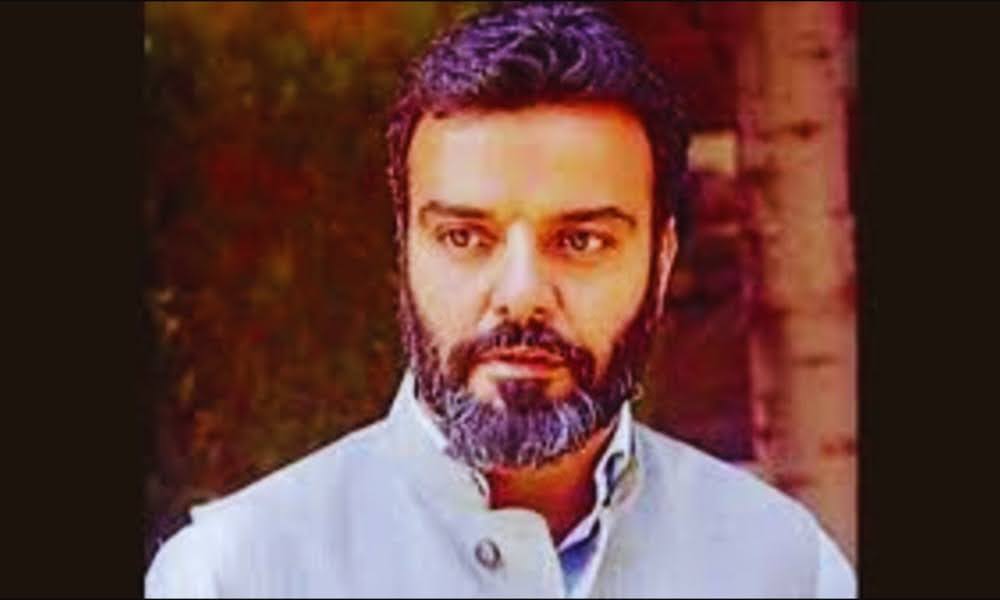
Member of Parliament from Srinagar, Aga Syed Ruhullah Mehdi, has written to Union Home Minister Amit Shah, seeking immediate and dignified medical treatment for incarcerated separatist leader Shabir Ahmad Shah.
The appeal comes amid growing concerns regarding Shah’s deteriorating health, particularly his battle with life-threatening prostate cancer.
Mehdi Seeks Family Involvement in Medical Decisions
In his letter, Ruhullah Mehdi, a National Conference leader and Lok Sabha member from Srinagar, stressed the need for Shah’s family to be included in decisions regarding his medical treatment.
“Shabir Ahmad Shah is now 70 years old. By every humane and legal standard he is entitled to medical treatment with dignity and fairness. His doctors have recommended three surgeries for serious medical conditions which include life-threatening prostate cancer. Despite the gravity of his condition, he remains incarcerated since 2017, without family support,” Mehdi wrote.
Shabir Shah’s Incarceration and Legal Background
Shabir Ahmad Shah, 74, has been lodged in Tihar Jail since July 25, 2017, following his arrest by the Enforcement Directorate in connection with a 2005 money laundering case.
Later, on October 4, 2019, the National Investigation Agency (NIA) filed a supplementary charge sheet against Shah and four others, including Yasin Malik, Masarat Alam, Engineer Rashid, and Asiya Andrabi, before a Delhi court.
The charges include Sections 120B (criminal conspiracy), 121 (waging war against the government of India), 121A (conspiracy to wage war), and 124A (sedition) of the Indian Penal Code.
Allegations of Harassment During Hospital Visit
Mehdi also raised concerns about the treatment of Shah during his recent medical visit.
“During visit to Safdarjung Hospital on May 1, 2025, his family has alleged that he was subjected to harassment and degrading treatment by escorting officers, and that access to his medical records has also been withheld from them,” Mehdi mentioned in his letter.
Legal and Moral Obligations Highlighted
The Srinagar MP emphasized that India has binding legal and moral obligations to ensure the humane treatment of prisoners, citing both domestic and international frameworks.
He referred to Article 10(1) of the International Covenant on Civil and Political Rights (ICCPR), which mandates that prisoners be treated with humanity and respect for their inherent dignity.
The Nelson Mandela Rules, specifically Rules 24 and 26, also require that prisoners receive the same standard of healthcare as the general population.
“In Shabir Shah’s case, one can quote multiple such obligations that appear to have been blatantly contravened,” Mehdi pointed out.
Precedents of House Arrest on Medical Grounds
Mehdi further cited previous instances where courts in India granted house arrest to undertrials on medical and humanitarian grounds.
“Zahoor Watali and Gautam Navlakha were both granted house arrest on medical and humanitarian grounds by Indian courts. These decisions acknowledge that incarceration must not come at the cost of life and dignity, particularly when there is no proven risk of escape or subversion.
With the same consideration can it not be said then, for Shah, whose legal status remains that of an undertrial, is a question of his basic human rights?” Mehdi questioned.
Political Leaders and Family Call for Compassion
Several political figures from Kashmir have echoed Mehdi’s call for a humanitarian approach regarding Shah’s treatment, urging the government to prioritize his health.
Shah’s daughter, Sehar Shah, also issued an appeal earlier this week, seeking compassion and access to proper medical care for her father.
Mehdi’s Concluding Appeal to the Government
In conclusion, Ruhullah Mehdi urged Home Minister Amit Shah to intervene and ensure that Shabir Shah is shifted to a medical facility equipped to handle cancer treatment.
“I urge you to ensure that Shabir Shah is provided dignified medical care in a facility equipped for cancer treatment. The measure of a nation is how it treats its weakest. Let us not fail that test,” Mehdi wrote.
The letter adds to the growing pressure on the government to uphold its legal and humanitarian responsibilities toward prisoners, particularly those suffering from severe medical conditions.