Asim Munir Threatens India Again, Calls Pakistan a ‘Net Regional Stabiliser’
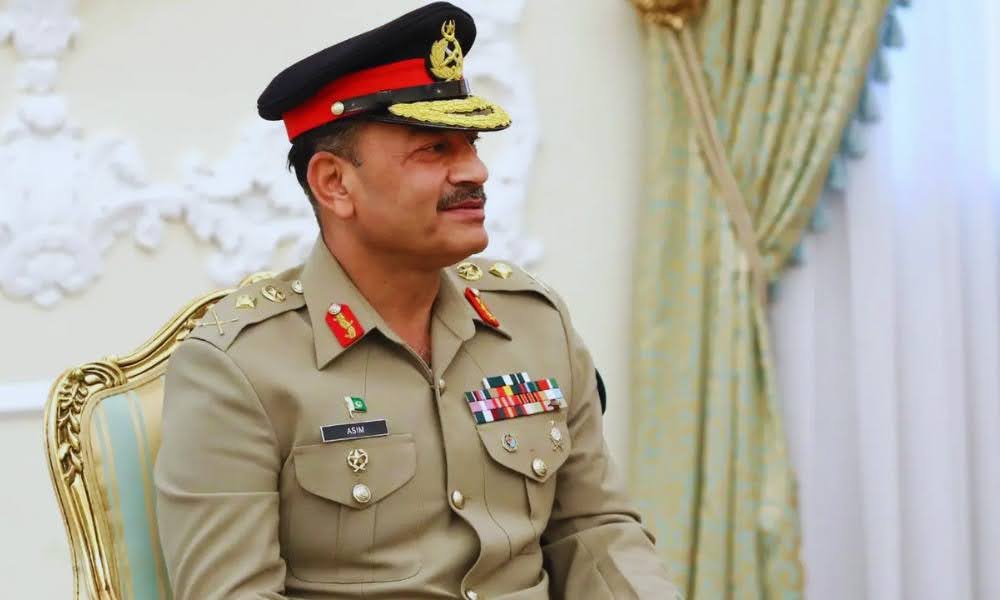
Turning a blind eye to state-sponsored terrorism, Pakistan’s Army Chief General Asim Munir has once again accused India of carrying out two unprovoked attacks on Pakistani territory.
Terming India’s actions as a “troubling absence of strategic foresight,” Munir’s remarks have escalated tensions between the two nuclear-armed neighbours.
Speaking at the Pakistan Naval Academy in Karachi, Munir blamed India for regional instability and warned that any future aggression would be met with a “decisive response.”
He portrayed Pakistan as a “net regional stabiliser” that had responded “resolutely” to India’s previous actions. He further accused New Delhi of undermining peace efforts and once again brought up the Kashmir issue.
Munir referred to Kashmir as under “India’s illegal occupation” and urged Pakistanis to honour the sacrifices of “our Kashmiri brothers who are struggling against India’s illegal occupation.”
Pakistan’s Internal Crises and International Designation
While Pakistan’s military leadership points fingers at India, the country faces several internal challenges.
A resurgence of “state-sponsored terrorism,” along with rising tensions along the borders with Afghanistan and Iran, has added to Pakistan’s already fragile political situation.
The United States has designated Pakistan as a Country of Particular Concern (CPC) under the International Religious Freedom Act of 1998, a status it has held since 2018, with a redesignation in 2022.
Additionally, the CIA World Factbook identifies Pakistan as one of the top transit corridors for opiates and cannabis trafficked alongside Afghanistan and Iran.
Terror Attack in Pahalgam and Indian Response
On April 22, a terrorist attack in Pahalgam, Jammu and Kashmir, resulted in the deaths of 26 people, with several others injured. The attack was carried out by The Resistance Front, a group linked to Pakistan-based Lashkar-e-Taiba.
Following the massacre, India launched a series of punitive measures against Pakistan. These included placing the Indus Waters Treaty of 1960 in “abeyance” and carrying out a military operation targeting terrorist infrastructure.
Operation Sindoor: India’s Precision Strike
On the night of May 7–8, India conducted airstrikes on nine terror camps located in Pakistan and Pakistan-occupied Kashmir (PoK) as part of Operation Sindoor.
These strikes targeted terror infrastructure, carefully avoiding civilian and military sites.
Indian defence officials reported that over 100 militants were eliminated during the operation, significantly damaging Pakistan’s jihadist networks.
Operation Sindoor marked one of the most significant military escalations between India and Pakistan since the 2019 Balakot airstrikes.
The offensive triggered retaliatory cross-border skirmishes and limited missile exchanges, which eventually led to a temporary ceasefire.
Escalating Rhetoric from Pakistan’s Army Chief
General Asim Munir’s latest remarks at the Pakistan Naval Academy echo statements he made before the Pahalgam attack. At that time, Munir had referred to Kashmir as Pakistan’s “jugular vein,” a phrase used to stir nationalist sentiment.
Once again, Munir accused India of destabilising the region and claimed that Pakistan had shown “restraint and maturity” despite provocations.
He expressed continued support for Kashmir’s “struggle” and called for a UN-backed resolution reflecting the “aspirations of the Kashmiri people.”
Indian observers have criticised the timing and content of Munir’s statements, noting a pattern where such rhetoric often coincides with or precedes cross-border terror incidents.
India’s Firm Stand on Terrorism
In response to these developments, Indian officials have reiterated the country’s firm stance against terrorism.
Operation Sindoor was described as a “necessary message” to Pakistan, highlighting New Delhi’s red lines on cross-border terrorism.
Following the operation, India intensified counter-terror efforts along the Line of Control and increased diplomatic pressure on Islamabad.
The Ministry of External Affairs has repeatedly stated that Pakistan must “act decisively against terror groups operating from its soil” if there is to be any progress in normalising bilateral ties.