Bilawal Bhutto Claims Pakistan Unaware of Masood Azhar’s Whereabouts, Suggests He May Be in Afghanistan
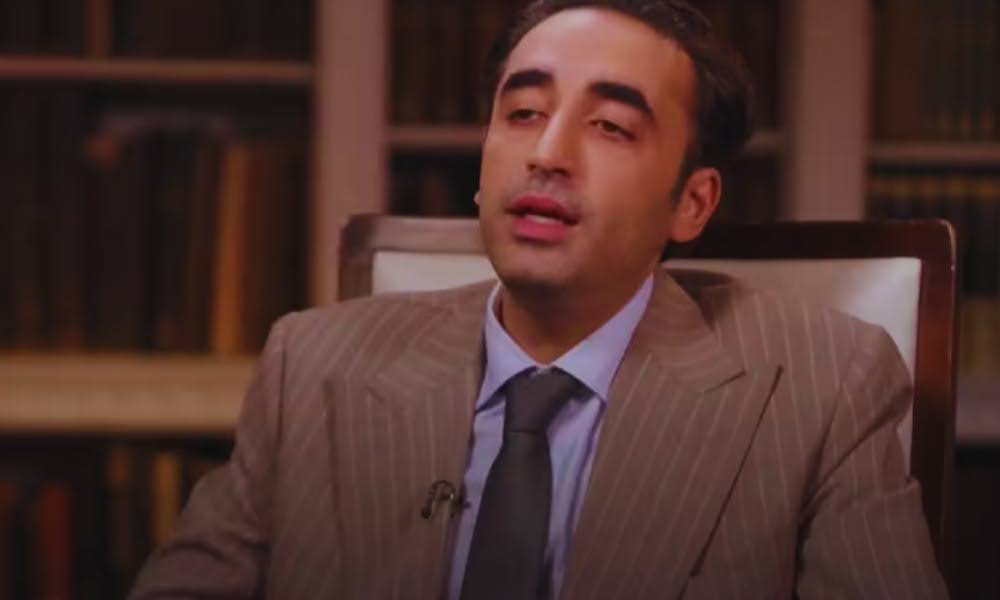
In a striking statement, Pakistani politician Bilawal Bhutto Zardari has declared that Islamabad does not know the whereabouts of Jaish-e-Mohammed chief Masood Azhar.
He added that Pakistan would willingly arrest him if India provides evidence proving he is on Pakistani soil.
Azhar is among India’s most wanted terrorists, having links to several major attacks, including the 2001 Parliament attack, the 26/11 Mumbai attacks, the 2016 Pathankot attack, and the 2019 Pulwama bombing.
After being designated a global terrorist by the United Nations in 2019, Azhar remains at the center of India-Pakistan tensions. He was released in 1999 during the Kandahar hijacking in exchange for passengers on Indian Airlines flight IC-814.
Pakistan’s Response on Azhar and Saeed
India has repeatedly asked Pakistan to hand over Masood Azhar and Lashkar-e-Taiba chief Hafiz Saeed, both accused of orchestrating deadly attacks in India. Despite evidence of their activities, Pakistan has denied their presence or freedom.
In an interview with Al Jazeera, Bhutto, who leads the Pakistan People’s Party (PPP), part of the country’s ruling coalition, responded to these allegations. He stated that Hafiz Saeed is not free and that Azhar may have moved to Afghanistan.
“That’s not accurate. That’s factually not correct that Hafiz Saeed is a free man. He is in the custody of the Pakistani state,” Bhutto said.
Speaking on Azhar, he added, “As far as Masood Azhar is concerned, we have been unable to arrest him or identify him. Given his past within the Afghan jihad context, it is our belief that he is in Afghanistan.”
Bhutto further remarked, “If and when the Indian government shares information with us that he is on Pakistani soil, we would be more than happy to arrest him. The fact is, the Indian government is not…”
Counterterrorism Cooperation and Bhutto’s Justification
When asked why Pakistan expects India to provide information about Azhar, Bhutto referred to counterterrorism cooperation between nations.
“When you have a CT (counterterrorism) cooperation with any country, we provide groups of our concern, they provide groups of their concern. That’s how we managed to thwart attacks here in London, thwart attacks in New York, thwart attacks in Pakistan,” he explained.
Bhutto also highlighted Pakistan’s limitations, stating, “If he is in Afghanistan, the West has now handed over to a group that once upon a time they called terrorists, and now they call the people in charge of Afghanistan… It’s not possible for Pakistan to go and do what all of NATO was unable to do within Afghanistan.”
The Indus Waters Threat and Rising Tensions
Bilawal Bhutto’s recent comments come amid heightened tensions between India and Pakistan, especially after the April 22 Pahalgam attack and India’s retaliatory Operation Sindoor.
During the operation, India targeted key terror bases, including the Lashkar-e-Taiba headquarters in Muridke and Jaish-e-Mohammed facilities in Bahawalpur.
Azhar himself claimed that 10 of his family members and four aides were killed during the strikes.
Bhutto has also been vocal on India’s move to suspend the Indus Waters Treaty, threatening severe consequences. “The Indus is ours and will remain ours – either our water will flow through it, or their blood,” he warned.
Union Minister Hardeep Puri dismissed Bhutto’s remarks, saying, “Tell him to jump somewhere in water. Well, how will he when there will be no water?”
India’s Concerns Over IMF Aid to Pakistan
The issue of terrorism has also surfaced in discussions around financial aid to Pakistan.
Defence Minister Rajnath Singh raised concerns over the International Monetary Fund’s recent $1 billion assistance to Pakistan, suggesting the funds could be used to bolster terror infrastructure.
Singh questioned, “Certainly, a large part of IMF’s one billion dollars assistance will be used to fund the terror infrastructure. Will this not be considered indirect funding by IMF, an international organisation?”
He alleged that Pakistan spends its tax revenue to financially support Masood Azhar, despite him being a UN-designated terrorist.
Pakistan’s Defence and Ongoing Global Scrutiny
The Pakistani government maintains that it has taken steps to counter extremism, including shutting down over 90 institutions linked to militant groups and securing convictions in terror-financing cases.
Addressing the claims about Saeed, Bhutto reiterated, “That’s factually not correct… He is in the custody of the Pakistani state.”
These statements come as Pakistan faces global scrutiny following the release of the Global Terrorism Index 2025, which ranked the country as the second most terrorism-affected nation, with a 45% rise in terror-related deaths due to militant resurgence near the Afghan border.
The United States and other international actors have expressed concern over the operations of groups like Jaish-e-Mohammed and Lashkar-e-Taiba within Pakistan.
Responding to these concerns, Bhutto remarked, “I could contest that with you. But suffice to say it’s beyond that now,” hinting at Pakistan’s position on these groups.
As diplomatic efforts continue, the issue of Masood Azhar and terrorism financing remains central to India-Pakistan relations, with the potential to influence regional stability and security.