Assam CM Himanta Biswa Sarma Warns Indigenous Communities in BTR of ‘Demographic Threat’, Cites Fertility Rate Data
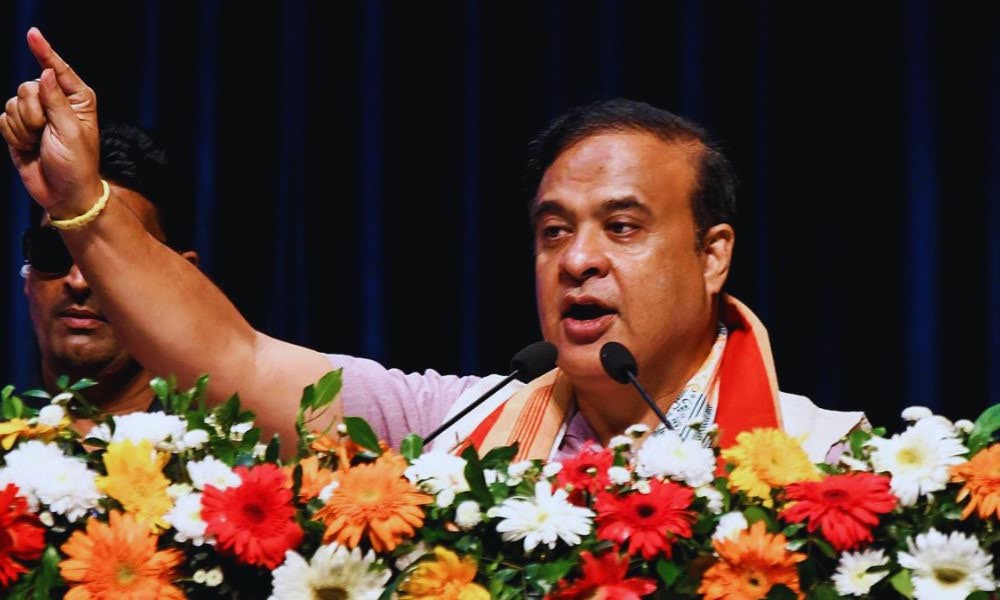
Assam Chief Minister Himanta Biswa Sarma has called upon the indigenous people residing in the poll-bound Bodoland Territorial Region (BTR) to stay alert to the demographic changes in the area.
While addressing a public gathering, he referred to a community whose rising population poses a potential threat, although he refrained from naming them.
Speaking at an event in Guwahati organised by the Bodoland Territorial Council (BTC) on Sunday, July 6, Sarma cited the 2020 National Family Health Survey report to explain the demographic shift.
He pointed out that the fertility rate among 26 indigenous communities in Assam had fallen to 2.1 from the previous 2.2 figure.
“The Bodos, who have fought for self-rule for decades, should understand what or who their biggest challenge is in terms of population. I won’t mention whose numbers have grown, but it is clear that the indigenous non-Bodo communities are development partners, not a threat,” Sarma said.
The 2020 data reveals that the total fertility rate among Muslims in Assam stood at 2.4, while for Hindus it was 1.6 and for Christians 1.5. Notably, the fertility rate among Muslims had decreased significantly from 3.6 in 2005-06 to 2.4 in 2020.
Unprecedented Peace in Bodoland
During his address, the Chief Minister praised the BTC government, led by Chief Executive Member Pramod Boro, for maintaining an atmosphere of “unprecedented” peace in the BTR during his tenure as Assam’s Chief Minister over the past four years and four months.
Reflecting on Bodoland’s history, Sarma said that the region, dominated by the Bodo community, had long witnessed conflicts, including ethnic clashes and insurgency, linked to the demand for self-rule since 1968.
“We once believed that Bodoland was lost to violence and peace was impossible. But ever since Narendra Modi became Prime Minister in 2014, efforts have been made to restore peace in the region,” he stated.
Sarma highlighted the January 2020 Bodo Peace Accord as a turning point that paved the way for stability.
“It makes me proud to say that not a single bullet was fired and no bomb exploded in the BTR after the accord. Such a situation was unimaginable in the past,” he said, expressing gratitude to all stakeholders, including Bodo student groups and former militant outfits.
Focus on Happiness and Inclusive Growth
At the ‘Bodoland Speaks: From Vision to Action’ event, Sarma also lauded the BTC’s decision to adopt Bhutan’s model of measuring development through the Gross National Happiness index.
“Unlike the conventional Gross Domestic Product, Bhutan’s Happiness index takes into account not just economic but also spiritual, cultural, and social well-being. The peace prevailing in Bodoland and the harmony among different communities reflect the success of this approach,” Sarma remarked.
BTC Chief Executive Member Pramod Boro echoed similar sentiments, stating that preserving cultural diversity and fostering respect among communities have been central to the BTC’s governance.
“After decades of ethnic strife, Bodoland has been peaceful for nearly five years. This peace has allowed our people to shift their focus from mere survival to progress. We have created an environment where every community respects the other’s culture and heritage,” Boro told reporters.
Celebration of Diversity in Bodoland
Boro described Sunday’s event as a tribute to the rich diversity of Bodoland. Several individuals were honoured for their contributions to preserving traditional art forms.
Additionally, a publication featuring 1,001 words and 1,001 sentences from 18 languages spoken by various BTR communities was released during the event.
The BTC, which governs the BTR, comprises 46 seats, six of which are nominated. The council is currently led by Boro’s United People’s Party Liberal (UPPL), a coalition partner of the Bharatiya Janata Party.
BTC Elections Around the Corner
With elections to the BTC expected by September, political activities in the region are set to intensify.
The BTR’s future is likely to depend on continued peace, development efforts, and how well the concerns of indigenous communities regarding demographic shifts are addressed.