GST Fears Drive UPI Hesitation Among Bengaluru Vendors, Prompting Tax Clarification
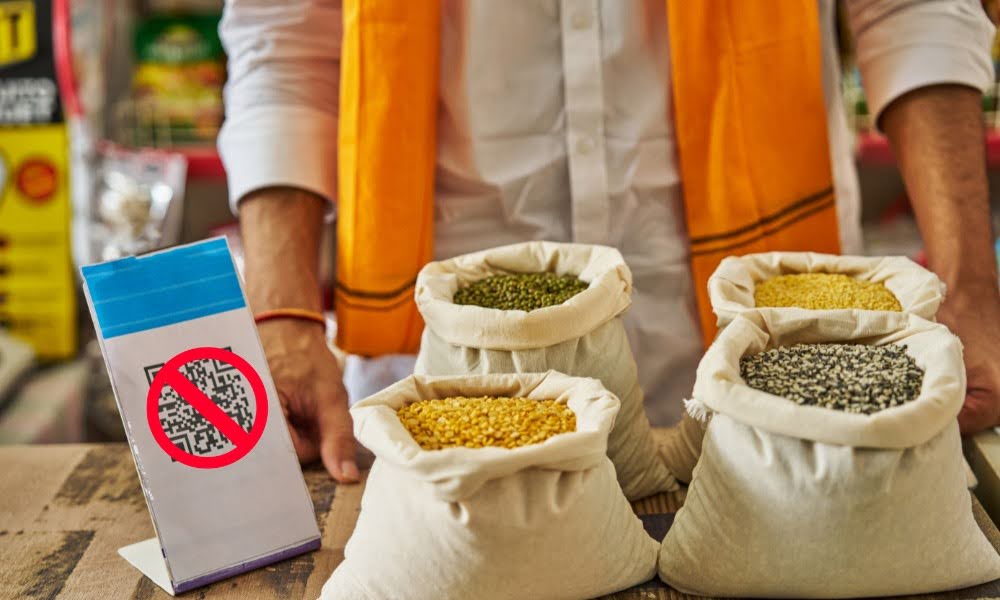
Shop owners across Bengaluru are refusing UPI payments due to rising concerns over tax notices and regulatory scrutiny. Many have put up signs reading “No UPI, Only Cash,” urging customers to avoid digital transactions.
Vendors claim digital payments have drawn attention from the Goods and Services Tax (GST) department, leading to increased pressure and fear of eviction.
GST Notices Target Small Traders
According to the Economic Times, several vendors, including roadside shopkeepers, have received GST notices, with demands reaching into lakhs of rupees.
Many fear being harassed by tax officials, and some even worry about possible eviction in the future.
GST Rules and Turnover Thresholds
Under current GST regulations, businesses that supply goods must register and pay GST if their annual turnover exceeds ₹40 lakh. For service-based businesses, the threshold is ₹20 lakh.
The commercial taxes department clarified that notices were only issued when UPI transaction data from 2021–22 onwards showed turnover above the GST threshold.
Businesses exceeding this limit are required to register under GST, report taxable turnover, and pay the applicable taxes.
Former additional commissioner of commercial taxes in Karnataka, H.D. Arun Kumar, told ET that officers must provide proof before issuing tax demands.
“Under the GST laws, the burden of proof is on officers. They must establish it before arriving at a tax demand, unlike in money laundering cases,” he said.
States May Follow Bengaluru’s Example
Experts have warned that if Bengaluru’s tax authorities recover substantial revenue from small vendors, other states might adopt similar practices.
Karnataka’s tax department faces mounting pressure to achieve a steep revenue collection target of ₹1.20 lakh crore for 2025–26.
At the same time, Chief Minister Siddaramaiah must manage ₹52,000 crore worth of welfare guarantees while addressing demands from Congress MLAs for increased infrastructure spending.
Tax Department Clarifies UPI Role in GST
The Tax Department clarified that GST notices are not based solely on UPI transactions. All forms of payments, including point-of-sale machines, digital platforms, bank transfers, and even cash, are considered.
The department stressed that avoiding UPI payments does not exempt traders from GST obligations.
A press release stated, “The GST is applicable on the consideration received for the supplies in any form, and UPI is only a method of receiving such consideration. The department will take suitable action to collect the applicable tax under the GST Act from the traders who have received consideration in any form.”
Thousands of Notices Issued
After issuing over 14,000 GST notices to traders who received more than ₹40 lakh annually via UPI, many small traders and street vendors in Bengaluru have stopped accepting digital payments.
In the first stage, notices were issued to over 5,500 vendors, including bakeries, petty shops, and vegetable sellers. These vendors were asked to pay 18% GST on their transactions.
Vendor Voices Concerns Over Margin and Viability
In response, vendors are hiding their UPI scanners and insisting on cash transactions. Rajappa, a vegetable vendor from Bannerghatta whose transactions exceeded ₹60 lakh per year, said he was unaware of such a large amount.
“Everyday, we used to procure vegetables, which had to be purchased by paying full payment. Entire day, the customers paid through UPI and we accepted it. The whole transaction seems to have crossed ₹60 lakh per year and they are asking us to pay the GST for the complete transaction amount,” he said.
“Our profit margin is not more than 10% and in that, we will have wastage in the form of rotten vegetables and fruits. At the most, we earn around ₹50,000 to ₹60,000 per month. Where can we bring ₹11 lakh per year to pay GST?” he questioned.
Bakery owners expressed similar concerns. “We are procuring everything from the market and selling it with a small profit margin. For example, we get milk from KMF and our profit margin will be around ₹2 per liter.
Now, we have to pay GST for two transactions. One is when we procure it for ₹38 per liter and another is when we sell it for ₹40 per liter. We will be paying 18% GST for ₹78, while our actual earning is only ₹2,” they said.
Tax Officials Ask for Business Details
The Commercial Tax Department identified UPI accounts linked to single PAN numbers that transacted over ₹40 lakh in the financial years from 2021–22 to 2024–25. Beneficiaries were asked to provide details about their business nature.
Commercial Tax Additional Commissioner Chandrashekhar Nayak urged vendors not to panic. “They can come to the Commercial Tax office and give details of their business and there is time for that. There will be some goods coming under the GST and some goods exempted from GST. If they give details, their problems would be solved,” he said.
Cash-Only Trend Returns Amid Digital Disruption
Despite reassurances, the shift back to cash has already taken root. Most small vendors, including petty shop owners, are now avoiding UPI payments altogether.
Meanwhile, customers are struggling to adjust to the cash-only model, as many had grown accustomed to using UPI for even the smallest daily purchases.