China Urges India to View Ties as Partnership, Not Rivalry: Wang Yi
Five years after the Galwan Valley clashes, India and China are making efforts to restore their relationship while the United States, under Donald Trump’s administration, intensifies its tariff measures against New Delhi.
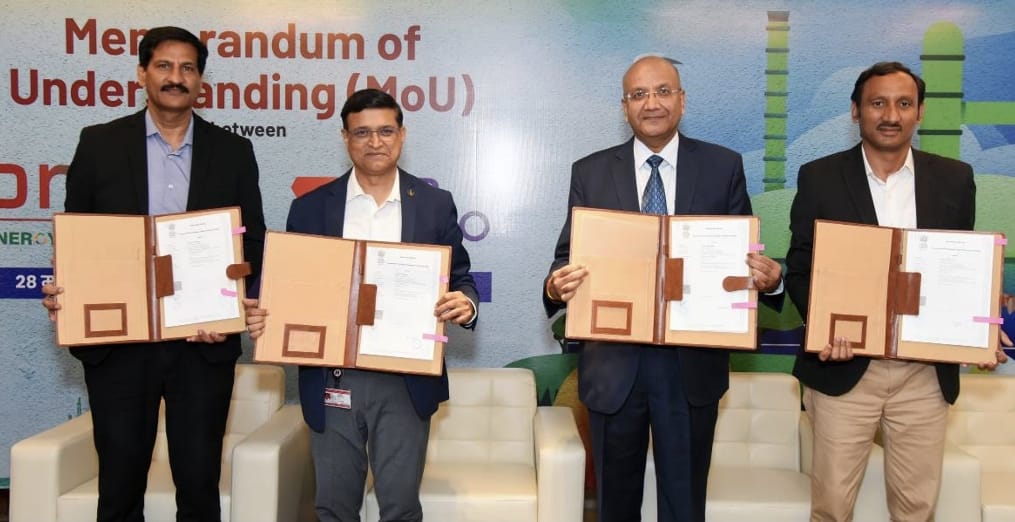
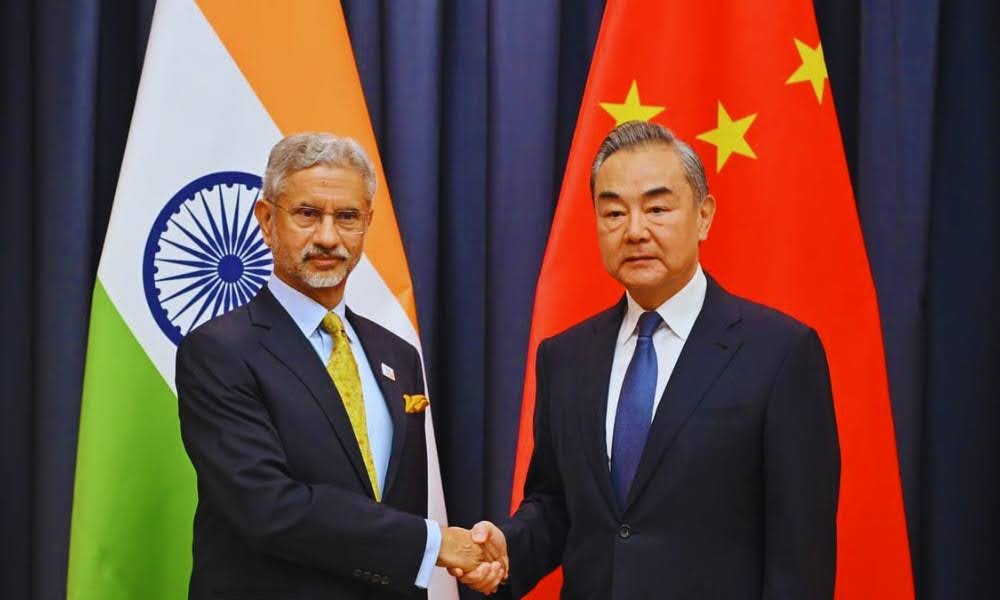
Chinese Foreign Minister Wang Yi’s visit to India, where he met External Affairs Minister Dr. S. Jaishankar, has been seen as a milestone in recalibrating bilateral ties to address disruptions from Washington’s tariff war.
Jaishankar Emphasises “Three Mutuals”
During the talks, Dr. Jaishankar described Wang Yi’s visit as an opportunity to assess bilateral relations.
“Having seen a difficult period in our relationship, Excellency, our two nations now seek to move ahead. This requires a candid and constructive approach from both sides,” he said.
He further underlined the “three mutuals — mutual respect, mutual sensitivity and mutual interest,” stressing that differences must not escalate into disputes and competition must not turn into conflict.
According to Dr. Jaishankar, the discussions covered a wide range of issues including trade, border trade, connectivity, river data sharing, pilgrimages, and people-to-people contacts.
Border Issues at the Centre
The talks are also focused on border concerns. Wang Yi is scheduled to hold discussions with National Security Adviser Ajit Doval on the subject.
“This is very important because the basis for any positive momentum in our ties is the ability to jointly maintain peace and tranquility in the border areas. It is also essential that the de-escalation process move forward,” Dr. Jaishankar said.
He added that both nations must aim for a “fair, balanced and multi-polar world order, including a multi-polar Asia,” and stressed the need for stability in the global economy.
Addressing India’s Concerns
Sources said China has agreed to address three major concerns of India — fertilisers, rare earths, and tunnel boring machines.
Rare earth elements, essential for high-tech industries and advanced defense equipment, are mainly produced in China, making them a critical factor in global supply chains.
A Chinese statement released after the talks quoted Wang Yi as saying that the world is experiencing a “once-in-a-century transformation at an accelerating pace”.
Referring indirectly to US pressure, he noted that “unilateral bullying is rampant” and free trade as well as the international order are facing severe challenges.
Wang Yi Calls for Cooperation
Wang Yi emphasised that as “the two largest developing countries with a combined population of over 2.8 billion,” India and China must take responsibility in promoting a multipolar world and the democratization of international relations.
He added that the meeting between Prime Minister Narendra Modi and President Xi Jinping in Kazan last year helped restart relations.
“Both sides have earnestly implemented the consensus reached by their leaders… peace and tranquility have been maintained in the border areas, and Indian pilgrims have resumed pilgrimages to Tibet,” he said.
He urged that both countries “strengthen their confidence, meet each other halfway, eliminate interference, expand cooperation, and consolidate the momentum of improvement in China-India relations.”
US Tariff War and Its Impact
The thaw in India-China ties comes at a time when the US has imposed a 50 percent tariff on Indian exports, largely due to New Delhi’s continued purchase of Russian oil.
India has responded by stressing that such imports are based on market requirements and are essential for ensuring energy security for its 1.4 billion people.
Interestingly, despite India facing steep tariffs, Washington has not imposed secondary sanctions on China. US Secretary of State Marco Rubio explained that most of the Russian oil bought by China is refined and re-exported to the global market, making sanctions complicated.
Boundary Talks and the SCO Summit
On Tuesday (August 19, 2025), Wang Yi said that India-China ties now face an “important opportunity.”
Referring to the setbacks of the Galwan clashes, he noted that they had not benefited either country. National Security Adviser Ajit Doval confirmed that Prime Minister Modi would attend the Shanghai Cooperation Organisation (SCO) summit in Tianjin, marking his first visit to China since Galwan.
“The setbacks we experienced in the past few years were not in the interest of our two countries,” Wang said, recalling the Kazan meeting between Modi and Xi Jinping during the BRICS summit.
Doval, calling previous talks in China “wonderful,” said recent months had seen an “upward trend” in bilateral ties. “I am very hopeful that like the last one, this 24th Special Representative-level talks will be equally successful,” he added.
Looking Ahead
Wang Yi highlighted the agreements reached in the 23rd round of boundary talks in December 2024, which focused on stabilising the borders and managing disagreements. He noted that stability had since been restored.
The Chinese Foreign Minister also underscored the importance of Prime Minister Modi’s participation in the upcoming SCO summit.
“History and reality proved once again that a healthy and stable China-India relationship serves the fundamental long-term interests of both of our countries,” he said.