China Breaks Ground on World’s Largest Hydropower Dam in Tibet, Raising Regional Alarm
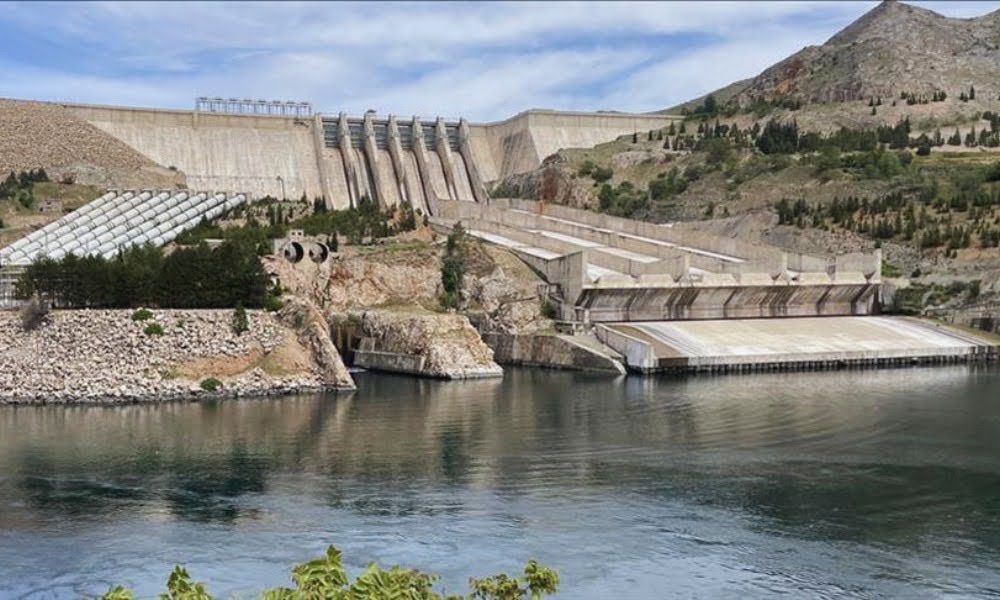
Chinese authorities have begun work on what will become the world’s largest hydropower dam, situated on the Yarlung Tsangpo river in Tibet.
Premier Li Qiang presided over the launch ceremony on Saturday, marking the start of the ambitious project.
The Yarlung Tsangpo river, which flows across the Tibetan plateau, has long been eyed by Beijing for its hydropower potential.
Concerns from India and Bangladesh
The project, named the Motuo Hydropower Station, has drawn criticism from India and Bangladesh due to potential downstream effects. The river feeds into the Siang and Brahmaputra rivers in India and the Jamuna in Bangladesh.
Indian and Bangladeshi officials fear the project could impact water flow, disrupt ecosystems, and harm local livelihoods.
In a 2020 report, the Lowy Institute warned that “control over these rivers [in the Tibetan Plateau] effectively gives China a chokehold on India’s economy.”
Arunachal Pradesh Chief Minister Pema Khandu also voiced concern that the dam could severely reduce water flow into the region, calling it “an existential threat to our tribes and our livelihoods.”
Environmental and Social Impact on Tibet
China claims the dam, which has a price tag of 1.2 trillion yuan ($167 billion), will protect the environment and improve local prosperity.
However, critics argue that it will flood Tibetan valleys known for biodiversity and risk earthquakes due to seismic activity in the region.
Previous protests by Tibetans against other dam projects were met with force, including arrests and reported beatings.
Massive Energy Output and Strategic Concerns
Once completed, the Motuo dam is expected to generate 300 billion kilowatt-hours (kWh) of electricity annually—three times more than the Three Gorges Dam.
The electricity is intended primarily for transmission outside Tibet to meet demand in China’s eastern cities. President Xi Jinping supports this approach, known as “xidiandongsong” or “sending western electricity eastwards.”
The location of the dam, near the Great Bend of the Yarlung Tsangpo, is strategically sensitive. Engineers plan to drill multiple 20-kilometer-long tunnels through the Namcha Barwa mountain and construct five cascading power stations.
India’s Strategic Response
India has taken note of the developments and expressed concerns through diplomatic channels. The Ministry of External Affairs emphasized the need for “transparency and consultation with downstream countries.”
India is now considering fast-tracking its own dam project on the Siang river in Arunachal Pradesh, called the Siang Upper multipurpose storage project.
Minister of State for External Affairs Kirti Vardhan Singh said in Parliament that the government “carefully monitors” Chinese activities on the Brahmaputra and is planning measures to safeguard India’s interests.
Environmental and socio-economic impact studies are also being conducted on the river’s major tributaries.
Potential Impact on Local Communities
The proposed Indian dam project has triggered opposition from native communities such as the Adi tribe in Arunachal Pradesh, who fear displacement and loss of land.
Chief Minister Pema Khandu urged residents to cooperate with pre-feasibility surveys, stressing that the dam would serve as a “defence mechanism” against sudden water releases from China’s dam in future.
In a statement, the National Hydroelectric Power Corporation (NHPC) acknowledged the need for local support, stating that “a project of such a magnitude can only be developed without any hindrance when the society by and large supports the project in every step of project construction.”
Diplomatic Communications and Policy Measures
The Indian government has reiterated its concerns over China’s dam projects multiple times.
At a press briefing in January, MEA spokesperson Randhir Jaiswal highlighted that India has “consistently expressed” its views on mega-dam projects upstream.
“The Chinese side has been urged to ensure that the interests of downstream states of the Brahmaputra are not harmed,” he said.
Bangladesh has also approached China for clarity on the project. In February, officials sent a letter to Beijing requesting more details. Both India and Bangladesh remain cautious as China proceeds with one of its most ambitious and geopolitically sensitive infrastructure projects.