ED Raids Over 35 Locations Linked to Anil Ambani’s Reliance Group in Massive Financial Probe
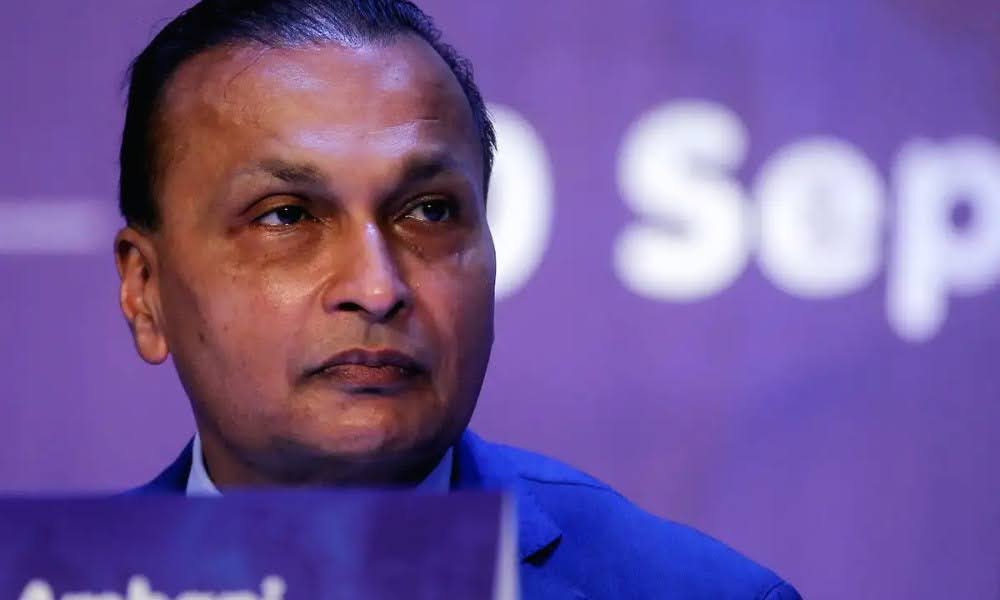
The Enforcement Directorate (ED) is conducting extensive raids at premises linked to Reliance Group Chairman Anil Ambani in Delhi and Mumbai.
The searches are related to a money laundering case connected to large-scale financial irregularities, based on two FIRs filed by the Central Bureau of Investigation (CBI).
Over 35 Locations Searched and Multiple Firms Involved
As part of the operation, ED officials examined documents from over 50 firms allegedly associated with the case and questioned more than 25 individuals.
Sources revealed that the ED is carrying out operations across nearly 35 locations. Initial investigations suggest a “well-planned and thought-out scheme to siphon off public money by cheating banks, shareholders, investors, and public institutions.”
The suspected offences include bribery of senior Yes Bank officials, who allegedly facilitated large, unsecured loans to entities under the Reliance Anil Ambani Group (RAAGA).
Dubious Loan Deals Between 2017 and 2019
Between 2017 and 2019, Yes Bank disbursed loans worth approximately Rs 3,000 crore to RAAGA companies.
According to ED sources, a quid pro quo arrangement was in place, where Yes Bank promoters received payments in their private entities just before the loan sanctions.
Investigators flagged multiple concerns: loans issued to companies with weak financials, repeated use of common directors and addresses, lack of proper documentation, and loan evergreening practices—where new loans were used to repay earlier ones.
Regulatory Bodies Support Investigation
Several agencies, including SEBI, NHB, NFRA, and Bank of Baroda, have submitted findings supporting the ED’s investigation. SEBI, in its report, noted major irregularities in Reliance Home Finance Limited (RHFL).
The company’s corporate loan book jumped from Rs 3,742 crore in FY 2017–18 to Rs 8,670 crore in FY 2018–19.
Separately, the State Bank of India (SBI) declared Reliance Communications (RCom) and Anil Ambani as “fraud” accounts.
SBI had earlier made the same classification in November 2020, which was retracted following a status quo order from the Delhi High Court in January 2021.
Third Consecutive Day of Raids
The raids, which started on July 24, continue for a third consecutive day. The ED has recovered documents and computer devices from different locations.
The ongoing searches are being conducted under the Prevention of Money Laundering Act (PMLA) and focus on claims that Rs 3,000 crore in loans from Yes Bank were illegally diverted.
Reliance Power and Reliance Infrastructure clarified that the raids had “absolutely no impact” on their operations, finances, or stakeholders.
They also stated that Anil Ambani is not a board member of either company and that there is no “business or financial linkage” to RCom or RHFL.
Yes Bank Loan Fraud and Rana Kapoor Angle
The ED’s current probe builds on its 2020 investigation, which linked nine companies under Anil Ambani to loans worth Rs 12,800 crore. That probe targeted Yes Bank’s then-promoter Rana Kapoor.
Ambani was questioned under PMLA for over nine hours during that investigation. Other major corporate borrowers like Essel, DHFL, Jet Airways, and Indiabulls were also named.
SBI’s Fresh Fraud Classification in 2025
In June 2025, SBI again declared RCom and its promoters as “fraud” accounts. Their exposure included Rs 2,227 crore in fund-based and Rs 786 crore in non-fund-based loans.
SBI cited diversion of funds, circular transactions, and suspicious invoices.
The forensic audit found that RCom and affiliates borrowed over Rs 31,500 crore. Around Rs 13,667 crore was used to repay old loans, Rs 12,692 crore went to related parties, and Rs 6,265 crore was allegedly misused.
Canara Bank’s Reversal Highlights Regulatory Gaps
Canara Bank, which had also marked RCom as a fraud account, later withdrew the classification in the Bombay High Court. This inconsistency across banks has exposed gaps in the application of fraud detection policies.
To address these issues, the RBI revised its Master Directions on Frauds in 2024. The changes included a 21-day notice period and a fair hearing process before classifying any borrower account as fraudulent.
Legal Defense and Corporate Responses
RCom claims protection under Section 32A of the Insolvency and Bankruptcy Code (IBC), which shields companies from prosecution for actions taken before insolvency proceedings.
Anil Ambani’s legal team argues he was only a non-executive director, with no role in daily management.
They also contend that SBI’s classification was made without a full hearing or access to forensic findings, and that similar notices against independent directors had previously been retracted.
ED Focuses on Bribery and Fund Diversion
The ED’s investigation is centered on allegations of fund diversion, backdated credit memorandums, and inadequate due diligence. There are also suspicions of bribe payments to Yes Bank promoters prior to loan approvals.
Inputs from regulatory bodies like SEBI, NHB, NFRA, and the CBI are playing a crucial role in supporting the probe under Section 17 of the PMLA.
What Lies Ahead
The ED will continue interrogations and evidence collection to establish links between fund diversion and bribery. SBI’s complaint may prompt a CBI FIR and potential legal action against Anil Ambani.
This case, tied to the broader Yes Bank investigation that began in 2020, is one of the most significant actions taken in recent years. It underscores rising regulatory scrutiny and a stronger push for accountability in large-scale corporate lending.