Gabriel India Soars 20% as Board Approves Strategic Restructuring Scheme
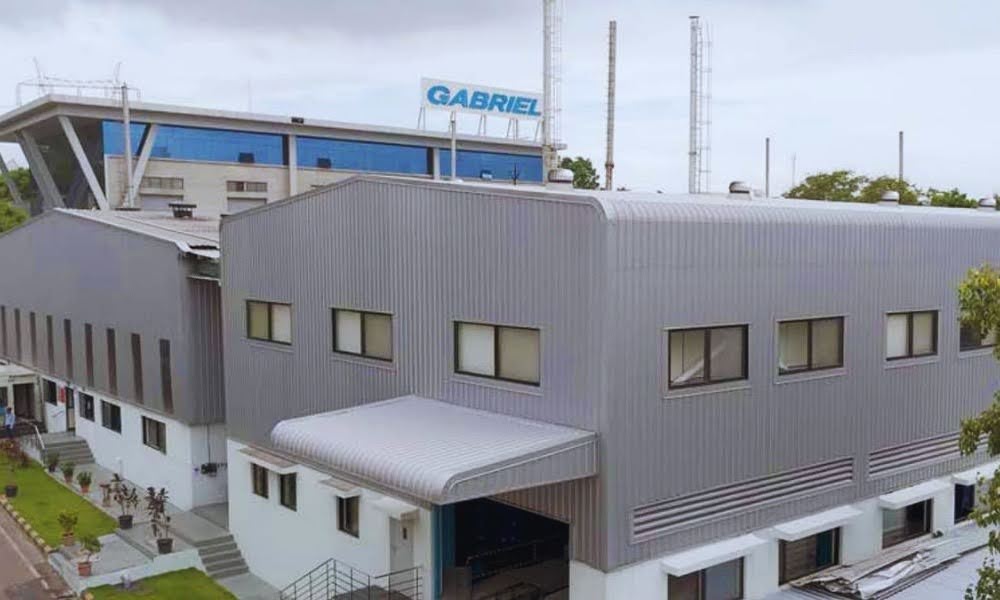
Shares of Gabriel India surged to a fresh all-time high, hitting the 20 percent upper circuit on July 1 after the company announced a significant restructuring plan.
The scheme includes the merger of Anchemco India Pvt Ltd with Asia Investments Pvt Ltd, followed by the demerger of Asia Investments’ automotive business into Gabriel India.
This restructuring aligns with the group’s larger strategy to achieve a revenue target of Rs 50,000 crore by 2030.
Details of the Proposed Restructuring
As part of the announced plan, Anchemco India, known for manufacturing automotive consumables such as brake fluid, radiator coolants, and diesel exhaust fluid, will first be merged into Asia Investments.
Following this, the automotive business of Asia Investments, which includes Anchemco and stakes in companies like Dana Anand, Henkel Anand, and ACYM, will be spun off and merged into Gabriel India.
The remaining non-automotive businesses of Asia Investments will continue to be held by the original entity after the demerger is complete.
Under the terms of the transaction, Gabriel India will issue 1,158 shares for every 1,000 shares held by promoters of Asia Investments Pvt Ltd.
The entire deal has been valued at eight times the projected FY25 Enterprise Value to EBITDA.
Timeline and Approvals
The proposed restructuring is subject to mandatory approvals from the company’s board, creditors, stock exchanges, National Company Law Tribunal (NCLT), and shareholders.
If all required approvals are received as expected, the transaction is likely to conclude within the next 10 to 12 months.
The merger of Anchemco into Asia Investments is scheduled to take effect from April 1, 2025. The demerger of Asia Investments’ automotive business into Gabriel India is expected to be completed by April 1, 2026.
Focus on Operational Consolidation and Debt-Free Growth
Gabriel India stated that this restructuring marks a strategic step toward operational consolidation, enabling the company to scale its business without adding debt.
The plan positions the company for both domestic and global expansion in the automotive sector.
The group aims to streamline its structure, drive transformation, and reduce investor concerns regarding product diversification and its approach to mergers and acquisitions.
This initiative is an integral part of the group’s roadmap to achieve its ambitious Rs 50,000 crore revenue target by 2030.
Market Response and Share Performance
The restructuring announcement triggered a sharp rally in Gabriel India’s share price.
On July 1, the stock hit the 20 percent upper circuit during early morning trade. At 9:42 am, the small-cap stock, which has delivered significant returns recently, was trading at Rs 842.75 apiece on the NSE.
Gabriel India’s Broader Growth Strategy
This latest initiative is not Gabriel India’s first such move. The company has consistently explored acquisitions and internal restructurings involving promoter-linked entities to improve efficiency and enhance investor confidence.
The restructuring plan will expand Gabriel India’s operational scale and strengthen its presence in India and international markets, without the need for additional debt or cash outlay.
Strengthening Position as a Diversified Auto Components Leader
Gabriel India plays a key role in ANAND Group’s efforts to become a diversified leader in the auto components space.
Beyond its core suspension system products, the company offers a wide range of products across multiple industries.
The group’s long-term strategic objectives focus on growth, market presence, and operational efficiency, all of which are reinforced through this restructuring initiative.
With the automotive sector rapidly evolving, Gabriel India’s efforts to consolidate operations and scale up without leveraging debt further underline its ambition to emerge as a significant global player.
The company remains committed to its goal of achieving a Rs 50,000 crore revenue milestone by 2030, supported by strategic initiatives like this restructuring plan.