Oil Prices Soar to 5-Month Highs as US Strikes on Iran Fuel Supply Fears
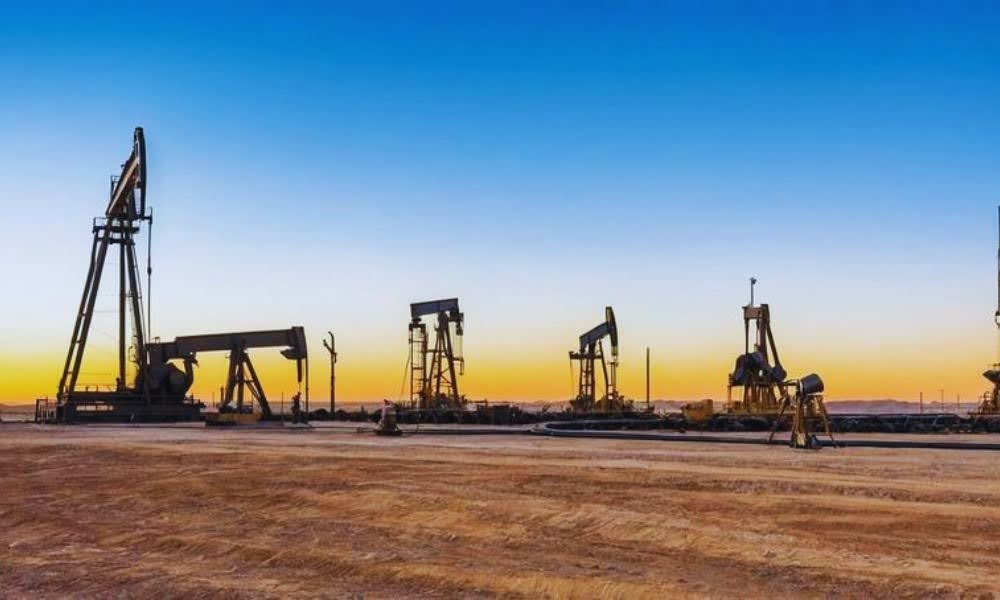
The Strait of Hormuz remains the only maritime link between the Persian Gulf and the open ocean, making it a critical route for the energy sector.
According to the U.S. Department of Energy, about 20% of the world’s oil consumption passed through the strait in 2024. The Department of Energy warned last week, “Very few alternative options exist to move oil out of the strait if it is closed.”
Following U.S. strikes, Iranian state media reported that the country’s parliament backed the idea of closing the Strait. Reuters stated that at least two supertankers carrying oil bound for the strait turned back on Monday.
Iran, ranked as the ninth-largest oil producer globally, wields significant influence over Middle East energy flows due to its proximity to the strait, which also manages nearly half of Saudi Arabia’s oil exports.
Could Rising Oil Prices Trigger Inflation?
The answer appears to be yes. Economists at J.P. Morgan cautioned last week that if Brent crude prices stay above $75 this summer, it could drive a 2% increase in the global consumer price index.
The prospect of rising energy prices is a growing concern for the U.S., which is already facing inflation risks from tariffs.
U.S. President Donald Trump voiced his concern on Monday through social media, stating, “EVERYONE, KEEP OIL PRICES DOWN. I’M WATCHING! YOU’RE PLAYING RIGHT INTO THE HANDS OF THE ENEMY. DON’T DO IT!”
Market Response Remains Calm for Now
Despite the heightened geopolitical risks, investor reactions in equity and bond markets were muted on Monday.
The S&P 500 index climbed by about 0.3%, while yields on the benchmark 10-year U.S. Treasury note dropped four basis points to below 4.35%, signaling a modest bond rally.
Commenting on the developments, Deutsche Bank strategist Jim Reid stated, “In terms of what this all means for markets going forward, it’s really all about whether the Iranian regime weaponizes oil.”
President Trump again emphasized the need for lower oil prices, repeating, “Everyone, keep oil prices down, I’m watching! You’re playing into the hands of the enemy, don’t do it,” on his Truth Social platform. He further urged the U.S. Department of Energy to “drill, baby, drill” and added, “I mean now.”
U.S. Energy Secretary Chris Wright replied, “We’re on it!” on X. However, it remains unclear how the department could further boost oil and gas drilling, considering drilling activity reached record levels during the previous Biden administration. The department did not respond to questions regarding Wright’s statement.
Oil Prices React to Escalating Conflict
Brent crude prices swung on Monday, reaching a five-month high before retreating by over 1% to $76.10 per barrel as tankers continued to transit the Middle East despite U.S. airstrikes on Iran.
The U.S. holds the Strategic Petroleum Reserve (SPR), the world’s largest emergency oil stockpile, which could be tapped in case of major supply disruptions.
The Trump administration has previously criticized the Biden administration for drawing from the SPR after Russia’s invasion of Ukraine in 2022.
Oil prices saw volatility on Monday following U.S. and Israeli attacks on Iranian nuclear sites over the weekend. As of 1000 GMT, Brent crude futures rose 78 cents to $77.79 per barrel, while U.S. West Texas Intermediate (WTI) crude climbed 76 cents to $74.60.
Trump confirmed the U.S. military had “obliterated” Iranian nuclear facilities in a coordinated operation with Israel.
Further Israeli airstrikes on Monday targeted Tehran and the Fordow nuclear site, escalating tensions. Iran, vowing to retaliate, warned that the strikes had expanded the list of legitimate military targets.
Global Reactions and Market Impact
Iran, the third-largest oil producer in OPEC, denounced the U.S. action, with Iranian officials branding Trump a “gambler” for siding with Israel. China also condemned the strikes, warning they could cause the situation to spiral out of control and damage U.S. credibility.
Markets reacted swiftly, with both Brent and WTI temporarily hitting five-month highs of $81.40 and $78.40 per barrel, respectively, before retreating. Prices later stabilized, recording around 1% gains.
Since the conflict escalated on June 13, oil prices have steadily risen over concerns that Iran could retaliate by obstructing the Strait of Hormuz — a route responsible for transporting approximately 20% of global crude oil.
Analysts Caution of Volatility Ahead
Despite increased geopolitical risks, oil supplies have remained steady so far. UBS analyst Giovanni Staunovo stated, “The geopolitical risk premium is fading slightly, as no supply disruptions have occurred yet.”
He added that ongoing uncertainty means markets will continue pricing in risk, leading to volatile prices.
Saxo Bank analyst Ole Hansen highlighted the global focus on the Strait of Hormuz, warning that any attempts by Iran to block or disrupt tanker traffic could lead to shipment delays and price hikes in the short term.
Possible Scenarios and Economic Impact
A Sunday report from Goldman Sachs suggested that Brent crude could briefly surge to $110 per barrel if traffic through the Strait were halved for a month. Prices could stay roughly 10% higher than normal for nearly a year.
However, the bank maintained that a prolonged major disruption is unlikely due to global efforts to prevent such a situation.
Analysts also noted that a closure would severely hurt Iran’s economy, as the country heavily depends on oil exports via the strait. Sugandha Sachdeva from SS WealthStreet told Reuters, “A long-term closure would significantly damage Iran’s own economy, making it a risky strategy.”
In India, concerns are mounting over the potential closure of the Strait. Rohit Sarin from Client Associates stated that India, which imports nearly 85% of its crude oil through the strait, could face inflation, growth slowdowns, and pressure on its current account deficit if oil prices spike.
High equity valuations, particularly in mid-caps, may also face correction pressures.
Prathamesh Mallya from Angel One outlined potential scenarios:
Best-case: De-escalation keeps WTI oil prices near $60, supported by steady OPEC supply.
Worst-case: Strait closure disrupts 20% of global maritime trade, pushing oil prices to $120-$130 per barrel.
Mallya pointed out that while Iran has repeatedly threatened to close the Strait in the past, it has never done so, giving the oil market some breathing room. He added that $60 per barrel acts as the base price, $100 as the midpoint, and $120-$130 as the extreme scenario.