
U.S. Senators Warn Nvidia CEO Jensen Huang Ahead of China Visit Over Chip Export Concerns
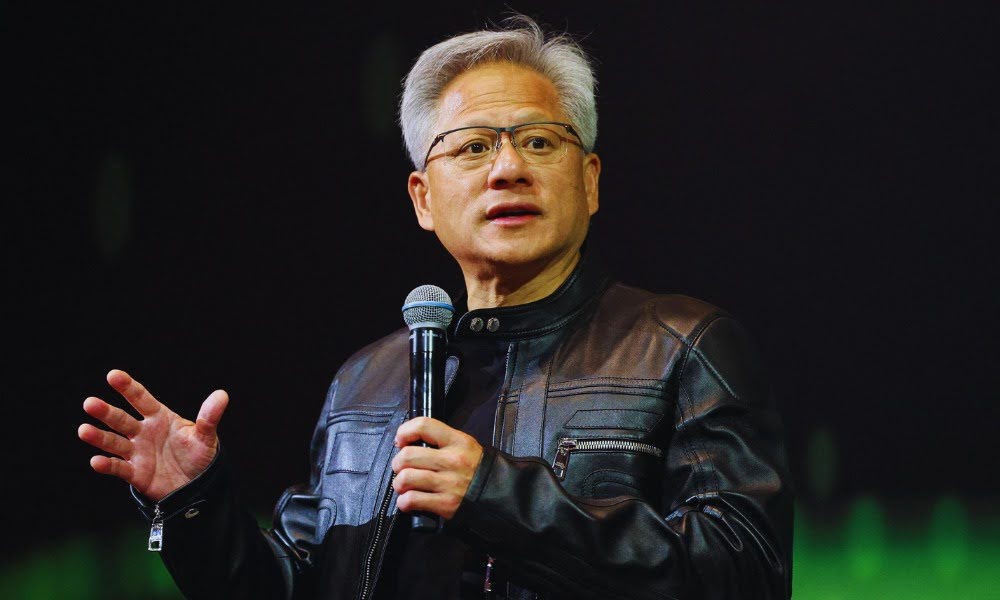
U.S. Senators Jim Banks and Elizabeth Warren sent a bipartisan letter to Nvidia CEO Jensen Huang, expressing concern over his planned visit to China.
The senators urged Huang to avoid meeting with Chinese firms suspected of undermining American chip export restrictions, particularly those associated with the Chinese military or intelligence operations.
The letter specifically requested that Huang not meet with any entities listed on the U.S. export control list.
“We are worried that your trip to the PRC could legitimize companies that cooperate closely with the Chinese military or involve discussing exploitable gaps in U.S. export controls,” the senators wrote.
Nvidia Defends Global Tech Leadership
A spokesperson for Nvidia responded to the letter, stating, “American wins” when U.S. technology becomes the global standard.
The company emphasized that China hosts one of the world’s largest AI developer communities and said that AI software should ideally operate on U.S. tech stacks, thus encouraging international adoption of American platforms.
In May, during the Computex trade show in Taipei, Huang had praised former President Donald Trump for easing some AI chip restrictions and had called the earlier rules ineffective.
Export Restrictions Threaten Revenue
Huang previously revealed that revised U.S. restrictions, issued in April, which blocked Nvidia’s modified AI chips for China, would result in a $15 billion revenue loss.
He has repeatedly criticized such controls, warning that they hinder American dominance in AI.
According to the senators, bipartisan support has emerged around the need to restrict exports of advanced AI hardware that could potentially enhance China’s military modernization.
Growing concern among U.S. lawmakers has prompted proposed legislation mandating chipmakers verify where their AI hardware ends up.
Links Between DeepSeek and Chinese Military
Reports last month suggested that Chinese AI firm DeepSeek, which allegedly uses Nvidia chips, supports China’s military and intelligence infrastructure.
DeepSeek has been accused of attempting to circumvent U.S. export controls through the use of shell companies.
Nvidia is reportedly working on a less advanced version of its Blackwell AI chips tailored for the Chinese market, following the imposition of tighter restrictions.
The senators expressed concerns about this and cited Nvidia’s new research facility in Shanghai as another example of how the firm may be inadvertently aiding China’s chip industry.
Huang Downplays Security Concerns
Speaking with CNN ahead of his China trip, Huang dismissed the notion that U.S.-made technology was essential to China’s military. “They simply can’t rely on it,” he said.
“It could be limited at any time; not to mention, there’s plenty of computing capacity in China already. They don’t need Nvidia’s chips, certainly, or American tech stacks in order to build their military.”
Huang reiterated that half of the world’s AI developers are based in China, stressing the importance of making U.S. technology available globally if America wishes to maintain AI leadership.
“We want the American tech stack to be the global standard,” he said, adding, “we have to be in search of all the AI developers in the world.”
Tightrope Between Washington and Beijing
Huang’s CNN interview came just days before his second trip to China this year and followed a meeting with former President Donald Trump.
The Nvidia CEO has been under growing pressure to balance geopolitical tensions while preserving access to the lucrative Chinese market.
Daniel Newman, CEO of tech advisory firm The Futurum Group, said Huang is “threading a needle” between U.S. policy and Chinese business interests.
“He needs to walk a proverbial tightrope to make sure that he doesn’t rattle the Trump administration,” Newman said. At the same time, Huang must remain positioned to attract Chinese investment if policies shift.
However, Newman noted that Huang’s optimism may not entirely reflect reality.
“I think it’s hard to completely accept the idea that China couldn’t use Nvidia’s most advanced technologies for military use,” he added.
He emphasized that such powerful hardware would likely play a role in any country’s AI or advanced weapons development.
DeepSeek and the Open-Source Debate
A U.S. official confirmed that DeepSeek had used Nvidia chips to train its AI models and was working with China’s military and intelligence networks.
Huang, however, said that the use of open-source AI models alone does not constitute a threat. Speaking about DeepSeek’s R1 reasoning model, he described it as “revolutionary,” noting that its open-source nature enables new players and countries to participate in AI development.
Competition and Interdependence
Huang concluded by acknowledging the competitive relationship between the U.S. and China but emphasized mutual reliance.
“The fact of the matter is, [China and the U.S.] are competitors, but we are highly interdependent,” he said. “To the extent that we can compete and both aspire to win, it is fine to respect our competitors.”