
Walmart Regains Footing After Earnings Dip, Analysts Eye Further Upside Amid Tariff Concerns
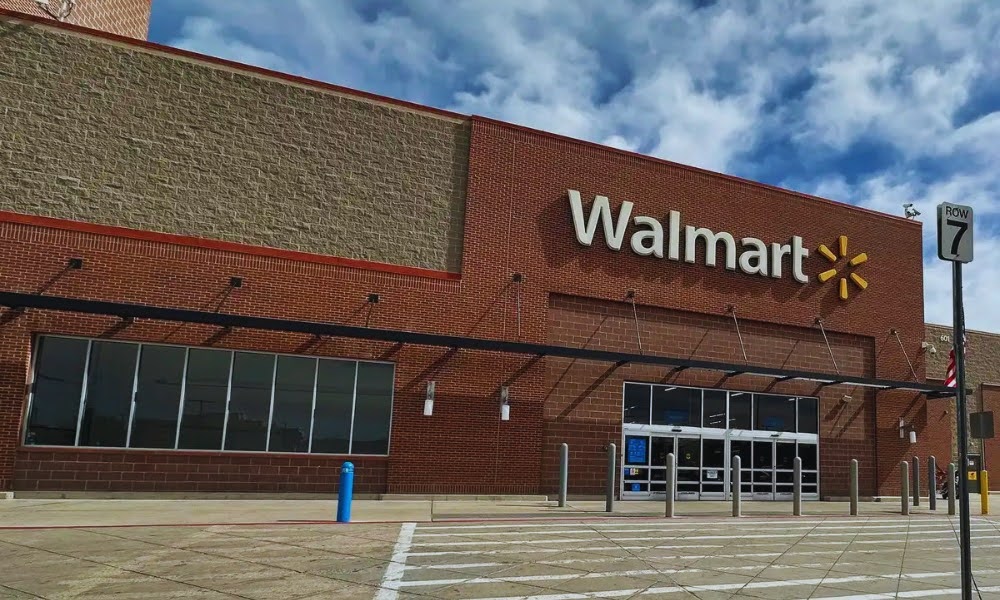
Walmart (WMT) shares ended the week slightly higher after bouncing back from a post-earnings dip. Analysts see potential for further growth.
Bank of America reaffirmed its “buy” rating and maintained its $120 price target, a figure it had set even before Walmart released its first-quarter earnings on Thursday.
That morning, Walmart stock dropped roughly 5% following executive remarks that higher tariffs could impact profits over the coming year. However, the stock climbed approximately 2% on Friday, finishing the week with a comparable overall gain.
Walmart to Implement Price Hikes
The company announced it would begin raising prices this month in response to tariffs but aims to limit increases in grocery categories.
According to Bank of America, competitive pricing is a key strength for Walmart, which is gaining popularity among higher-income consumers.
“We reaffirm our Buy on [Walmart] as share gains continue … as its strong value offering & digital convenience resonate, supporting [Walmart’s] ability to achieve previous guidance,” Bank of America analysts stated.
Bank of America currently holds one of the highest price targets on Walmart at $120, while the average price target among analysts polled by Visible Alpha stands at $110.79 — around 8% lower.
Mixed Views on Outlook
While Walmart remains confident in its full-year sales forecast of 3% to 4% growth, Chief Financial Officer John David Rainey warned that annual earnings growth might not be feasible if steeper tariffs are reinstated.
Deutsche Bank, however, remains optimistic, raising its second-quarter and full-year projections for earnings per share and comparable U.S. sales growth. In a note published Thursday, Deutsche also gave Walmart a “buy” rating and set a $109 price target.
“We think the [Walmart] bull thesis remains intact, with upside driven by its widening competitive moat, including very strong price gaps,” Deutsche stated.
Tariffs Force Strategic Adjustments
Walmart posted solid first-quarter results on Thursday, driven by double-digit growth in digital sales, membership fees, and ad revenue.
But CFO John David Rainey made headlines with his stark warning regarding tariffs: if new duties on Chinese goods are enacted, customers should expect price hikes.
Walmart CEO Doug McMillon confirmed during the earnings call that the company could not “absorb” rising costs “given the reality of narrow retail margins.”
“Even at the reduced levels, the higher tariffs will result in higher prices,” McMillon said.
Speaking to CNBC on Thursday, Rainey echoed the concern, stating that tariffs remain “still too high” to absorb. He warned that shoppers might begin to see higher prices at the end of this month, with broader increases rolling out in June.
“We’re wired for everyday low prices, but the magnitude of these increases is more than any retailer can absorb,” Rainey told CNBC. “So I’m concerned that the consumer is going to start seeing higher prices. You’ll begin to see that, likely towards the tail end of this month, and then certainly more in June.”
U.S.–China Tariff Changes and Supply Chain Impact
Earlier this week, the U.S. agreed to lower its maximum tariff rate on Chinese goods from 145% to 30% for 90 days.
In return, China reduced its 125% tariff on American products to 10% over the same period. Despite this, the U.S. is maintaining a 10% universal tariff on nearly all imports.
Walmart executives stated in April that two-thirds of their U.S. merchandise — including grocery items — is domestically made or sourced. The remaining third, however, comes largely from countries like China and Mexico.
Rainey also told CNBC that Walmart continues to collaborate with vendors to keep prices as low as possible. While no supplier orders have been canceled, some have been downsized in reaction to trade developments.
Sector-Wide Price Hike Concerns
Walmart is not alone in bracing consumers for potential price hikes. Target CEO Brian Cornell had warned in March that food prices, especially produce from Mexico, may rise.
Costco CEO Ron Vachris also stated that the retailer is working to soften tariff impacts, noting that one-third of Costco’s U.S. sales are based on imported goods.
Strong Quarterly Performance
Walmart reported that U.S. store sales rose 3.2% year-over-year in the first quarter, reaching $112.2 billion.
Global revenue for the quarter hit $165.6 billion, marking a 2.5% increase from the same period last year. Health and wellness products, along with grocery sales, were highlighted as key drivers.
The company also saw its U.S. e-commerce business grow by 21% year-over-year, achieving profitability for the first time.
In 2024, Walmart generated $681 billion in revenue, making it the world’s largest retailer by revenue. The company expects to grow revenue by 3% to 4% in 2025.