Nagesh Kukunoor Returns with ‘The Hunt’: A Riveting Dive into the Rajiv Gandhi Assassination Probe
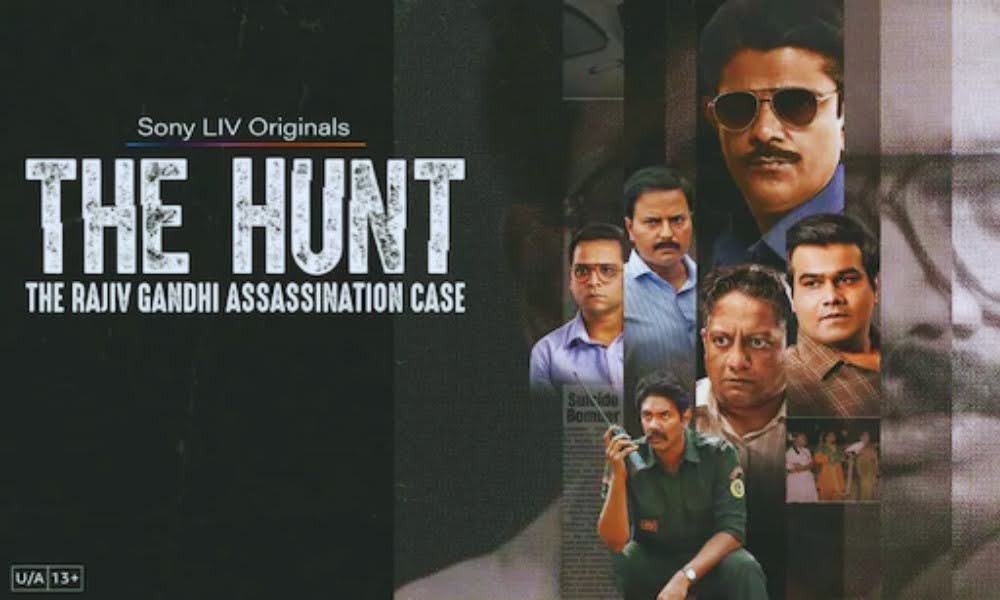
Nagesh Kukunoor returns to the screen with “The Hunt,” a critically acclaimed series that explores the intense investigation into the assassination of former Prime Minister Rajiv Gandhi.
The series dives into the 1991 incident that shocked India and altered its political narrative. In an interview with Seema Chishti of The Wire, Kukunoor spoke about his initial reluctance to take on a political subject.
“When Samir Nair approached me with this idea, my initial response was I do not want to do anything political or religious… The only kind of politics I’ll write about is my fictional show City of Dreams,” he said.
However, after reading the script, he was drawn in. “When I read it, I kind of knew how to structure this show,” he said.
Rather than focus on the political or emotional aftermath, the series emphasizes the methodical investigation. Avoiding sensationalism, “The Hunt” highlights the meticulous steps taken by law enforcement amid a vastly different technological era.
Capturing 1990s India
Set in a time before digital surveillance, smartphones, or quick communication, “The Hunt” reconstructs the 90 days following the assassination.
With subdued visuals and a slow, deliberate pace, it immerses viewers in a country just beginning its transformation. The series reveals how officers worked without the tools today’s investigators take for granted.
Kukunoor acknowledged the technical hurdles in recreating a pre-Internet India. The director noted how the slow speed of information and analog tools influenced the storytelling rhythm.
A Departure from Kukunoor’s Earlier Works
Known for films like “Hyderabad Blues,” “Iqbal,” and “Dor,” Kukunoor’s work often focuses on human stories, internal conflicts, and emotional journeys.
“The Hunt,” while based on real events, still retains his signature human-centered lens. Though he has dabbled in thrillers like “8×10 Tasveer,” this series represents his first entry into true crime.
With a careful approach to facts, Kukunoor treats this story as his most challenging writing task. “It is my first adaptation of a book, and for the first time, I am dealing with true crime,” he said.
Adapting ‘Ninety Days’ and Assembling the Team
Based on journalist Anirudhya Mitra’s “Ninety Days,” the series follows IPS officer D Karthikeyan (Amit Sial) and his team, including Amit Varma (Sahil Vaid), Amod Kanth (Danish Iqbal), K Ragothaman (Bagavathi Perumal), Radhagovind Raju (Girish Sharma), and Captain Ravindran (Vidyuth Garg).
Together, they track down conspirator Sivarasan. Kukunoor made the choice to stick closely to Mitra’s book. “There are several points of view. We decided to stick to Mitra’s book and not engage with anyone,” he said.
The series reveals moments of bureaucratic missteps, such as the delay in storming Sivarasan’s hideout, and explores the information through a journalistic lens.
“I don’t look into the motives. Like journalists do in a reportage, I have put out the information as honestly as possible,” Kukunoor said.
Balancing Storytelling with Real Events
Originally planned as six episodes, the series expanded to seven to explore the prolonged wait before the final events unfolded. The narrative touches on moments that seem almost cinematic in nature—like a truck unexpectedly breaching security or a camera surviving the blast.
“Absolutely, no screenwriter could have imagined it,” said Kukunoor. His scientific mind reflected on the camera’s survival: “The engineer in me feels he must have raised his hands to record the incident as the impact blew away everything below that level.”
Shades of Grey and Subtle Stereotypes
“The Hunt” avoids moral binaries. It portrays even terrorists in human light, enjoying popular cinema while plotting crimes. Kukunoor said, “If given any material that pointed fingers, I would not have attempted it.”
He believes that complex characters are more compelling and reflective of reality.
The series also explores cultural stereotypes, particularly North-South biases. Kukunoor’s own upbringing in Tamil Nadu, combined with his roots in Hyderabad, shaped this understanding.
“In North India, Hyderabad is considered part of the deep South. It irritated my father no end,” he said.
Deep Emotional Layers and Character Foils
The character of Ragothaman provides a window into the emotional complexity of investigating someone from one’s community. “It is one of those things that I always wanted to understand,” said Kukunoor.
His meticulous approach to production design reflects in the visual tone of the series.
Filmed in Hyderabad and Mumbai, he stripped the visuals of any decorative excess to authentically recreate the early 90s. “Photographs of the period guided me,” he said, referring to the modest images of officers on duty.