Bilawal Bhutto Warns of War Over Water, Urges India to Resume Dialogue Amid IWT Tensions
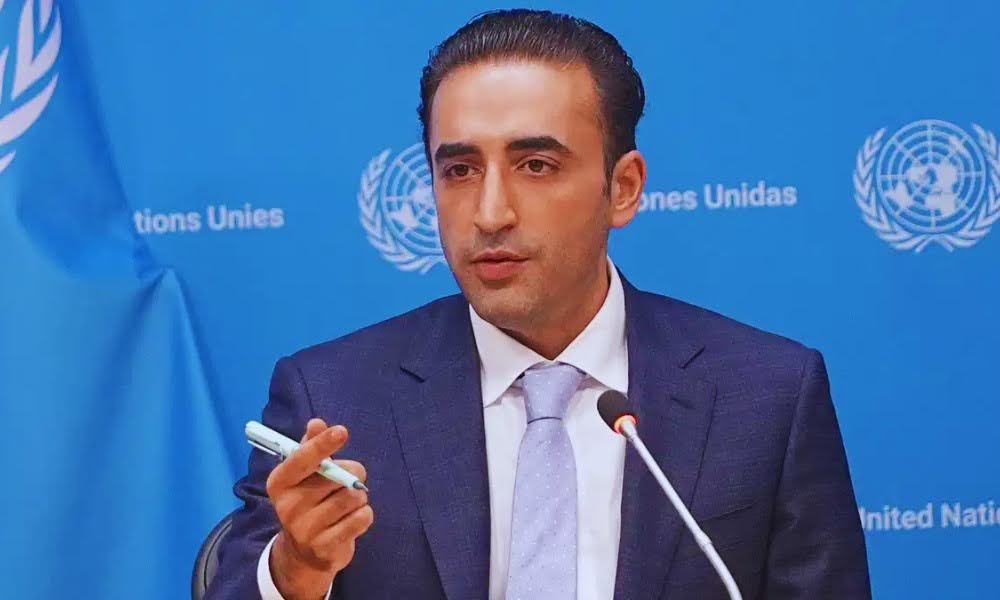
Pakistan People’s Party (PPP) leader Bilawal Bhutto-Zardari has once again called on India to resume dialogue with Pakistan to address all “outstanding issues” between the two neighbouring nations.
This latest call for talks follows closely after Pakistani Prime Minister Shehbaz Sharif made a similar appeal to New Delhi, amid rising tensions stemming from India’s move to suspend the Indus Waters Treaty (IWT) following the April 22 terror attack in Pahalgam.
Warning Over Water Dispute
In an interview with German broadcaster DW Urdu, Bilawal Bhutto-Zardari issued a stern warning that India’s attempts to cut off Pakistan’s water supply could escalate into war.
“Any attempt by India to block Pakistan’s water supply would be seen as an existential threat, leaving Pakistan with no option but war,” he said.
The former foreign minister emphasized that while Pakistan does not seek conflict, it cannot compromise on issues related to national security and water rights. He added that concerns such as water security are “non-negotiable.”
Dialogue as the Only Path Forward
Bilawal reiterated that all pending issues between India and Pakistan should be resolved through comprehensive dialogue. “If India does not come to the table, it will not be in their favour,” he asserted.
A day prior to the DW interview, Bilawal had called upon the international community to pressure India to engage in talks aimed at establishing lasting peace in South Asia.
He stressed that critical matters such as Kashmir, water disputes, and terrorism can only be resolved through a composite dialogue framework.
Islamabad has also asked Washington to play a role in bringing India to the negotiating table.
India’s Firm Stance on Terrorism
Indian Prime Minister Narendra Modi has made it clear that any dialogue with Pakistan will be limited to terrorism and Pakistan-occupied Kashmir.
He reiterated India’s long-standing position, saying, “blood and water cannot flow together,” indicating that the suspension of the Indus Waters Treaty will not be lifted until Pakistan takes firm action against terror outfits operating from its territory.
Escalation After Pahalgam Attack
Tensions between India and Pakistan intensified following the terror attack in Pahalgam on April 22, which claimed the lives of 26 Indian citizens.
India launched Operation Sindoor in retaliation, targeting terror camps in Pakistan and Pakistan-occupied Kashmir on May 7.
In response, Pakistan attempted attacks on Indian military installations on May 8, 9, and 10.
India responded with strong military measures. Hostilities ceased following a mutual agreement between the Directors General of Military Operations (DGMOs) from both sides on May 10.
Lower Threshold for War, Warns Bilawal
Speaking to the New York Post, Bilawal Bhutto-Zardari expressed concern that the possibility of a full-scale war between India and Pakistan is now greater than ever before, particularly after India’s retaliatory strikes.
He warned US diplomats and lawmakers that the “threshold” for war between the two nuclear-armed nations is at its lowest. “We’re all a lot less safe as a result of this conflict than we were before,” Bilawal said.
“The threshold of full-out military conflict between India and Pakistan has been drastically lowered — the lowest it has ever been in our history, as a result of this conflict,” he added.
India’s Shift in Approach to Terrorism
Following the decades-long pattern of terrorist attacks linked to Pakistan, India has shifted its strategy by treating these incidents as acts of war.
The Pahalgam massacre, where 26 Indians—mostly Hindus—were killed by the terror group Lashkar-e-Taiba, marked a significant escalation in India’s response to cross-border terrorism.
Bilawal claimed that “as things stand now, if there’s a terrorist attack anywhere in India it immediately means war, and the law of reciprocation means, therefore, if there’s a terrorist attack in Pakistan, we are to also treat it as an act of war.”
Pakistan’s Global Position Weakens
Pakistan has been actively trying to portray India as the aggressor in global forums since Operation Sindoor. However, its efforts have not gained much traction.
Islamabad has also faced criticism for not taking concrete action against Lashkar-e-Taiba, the group behind the Pahalgam attack, nor has it handed over the perpetrators believed to be hiding on Pakistani soil.
As tensions remain high, both countries are under scrutiny from the international community, with calls for restraint and diplomatic resolution growing louder.