Former RBI Governor Urjit Patel Appointed Executive Director at IMF

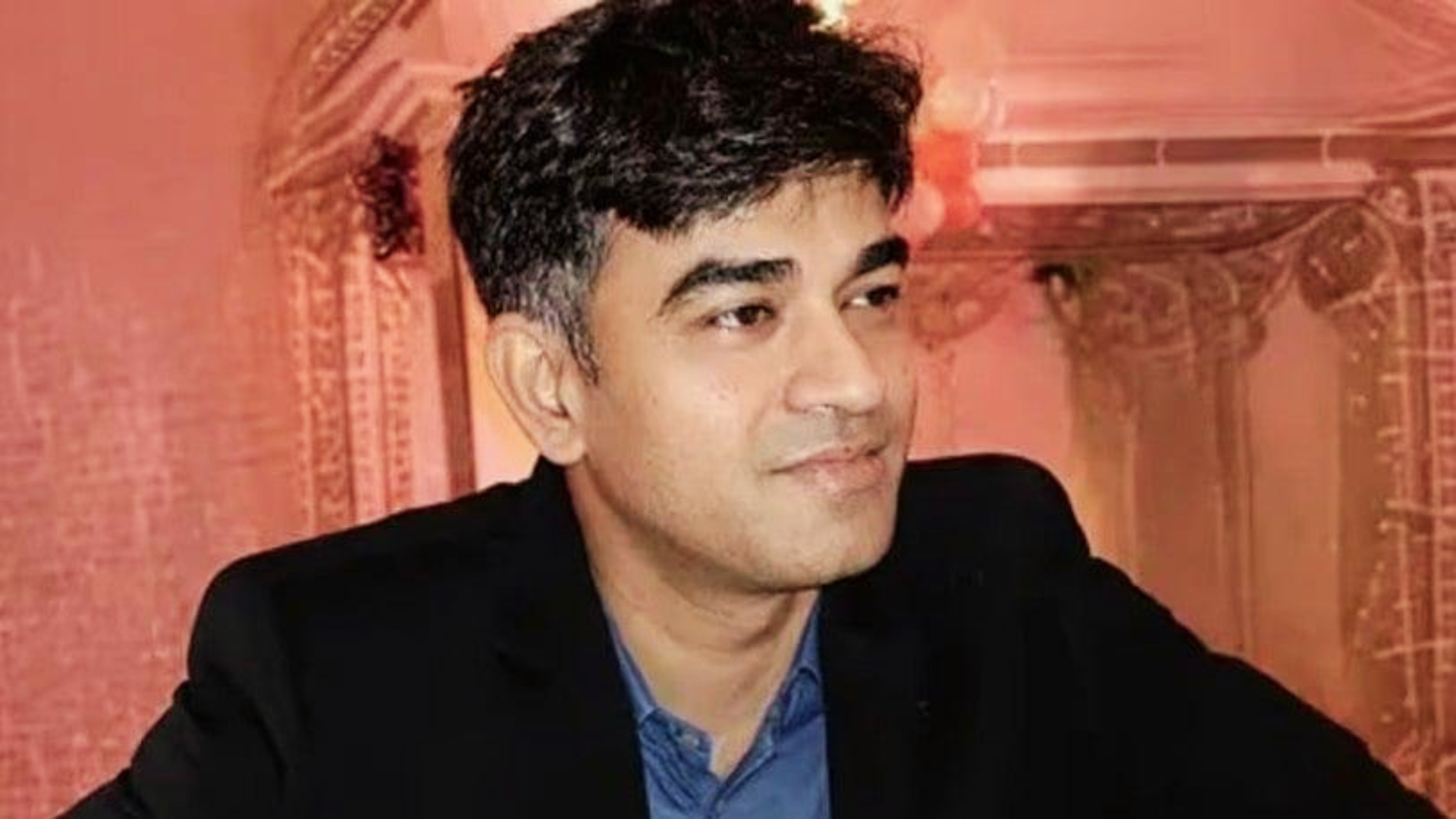
Former Reserve Bank of India (RBI) governor Urjit Patel has been appointed as India’s next Executive Director (ED) at the Washington-based International Monetary Fund (IMF) for a three-year term.
The Appointments Committee of the Cabinet, chaired by Prime Minister Narendra Modi, approved Patel’s name through an official order dated August 28.
Return to Key Role After Seven Years
Patel returns to a prominent government role nearly seven years after resigning as RBI governor.
The Cabinet notification stated, “The Appointments Committee of the Cabinet has approved the appointment of Dr. Urjit Patel, Economist and Former RBI Governor, to the post of Executive Director (ED) at the International Monetary Fund, for a period of three years with effect from the date of assumption of charge of the post, or until further orders, whichever is earlier.”
The position had been vacant since April 30, when Krishnamurthy Subramanian was removed following controversies linked to his book and alleged protocol violations.
Patel is currently one of the eight non-executive directors at Britannia Industries.
Role of IMF Executive Board
The IMF website explains the responsibilities of the executive board. “The executive board (the Board) is responsible for conducting the day-to-day business of the IMF. It is composed of 25 directors, who are elected by member countries or by groups of countries, and the managing director, who serves as its chairman.
The Board usually meets several times each week. It carries out its work largely on the basis of papers prepared by IMF management and staff.”
Tenure at the RBI
Patel became the RBI governor on September 4, 2016, succeeding Raghuram Rajan, who stepped down after disagreements with the government.
Patel’s tenure was also cut short, and he resigned on December 10, 2018. His exit came months after the introduction of electoral bonds in January 2018 and rising tensions with the finance ministry.
Even after his resignation, Prime Minister Modi praised him in a rare tweet. “Dr. Urjit Patel is a thorough professional with impeccable integrity.
He has been in the Reserve Bank of India for about 6 years as Deputy Governor and Governor. He leaves behind a great legacy. We will miss him immensely,” Modi said.
In an interview with ANI, Modi clarified that Patel stepped down for personal reasons, rejecting speculation of political rifts.
A retired official noted that though relations between Patel and the government had faced strains, his IMF appointment showed that ties were never broken.
Views on Banking Regulation
In June 2018, Patel appeared before the parliamentary standing committee on finance, where he asked for stronger powers to regulate public sector banks following the ₹14,500 crore Punjab National Bank fraud.
In its written submission, the RBI said Section 51 of the Banking Regulation Act needed amendments, since the 1949 law did not fully cover public sector banks. “This forms a great constraint for a regulator and supervisor,” the RBI said.
Patel also supported the government’s demonetisation move in 2016, when ₹500 and ₹1,000 notes were withdrawn. Addressing speculation that the RBI was excluded from the process, Patel told a parliamentary panel that he was “consulted” during the decision-making.
Early Life and Education
Born on October 28, 1963, in Nairobi, Kenya, Patel’s family traces its origins to Gujarat.
He studied economics at the London School of Economics, completed his MPhil at Oxford University in 1986, and earned his PhD in economics from Yale University in 1990.
Previous Association with IMF
This appointment marks Patel’s second stint at the IMF. After completing his PhD, he joined the organisation and worked on country desks for India, the US, the Bahamas, and Myanmar.
Between 1992 and 1995, he was part of the IMF’s India desk, during the early years of India’s economic reforms. He later went on deputation from the IMF to the RBI, where he contributed to banking reforms, debt market development, pension fund restructuring, and foreign exchange market evolution.
Other Roles and Contributions
After leaving the RBI, Patel held several important positions. He chaired the National Institute of Public Finance and Policy (NIPFP) in 2020.
He later became vice-president of the Asian Infrastructure Investment Bank (AIIB), where he managed operations across South Asia, Southeast Asia, and the Pacific.
Patel has also worked as a consultant for the Ministry of Finance, with the Boston Consulting Group, and at Reliance Industries. He was also associated with the Brookings Institution as a non-resident Senior Fellow.
IMF Responsibilities Ahead
As Executive Director at the IMF, Patel will represent India and other countries in his constituency at the executive board. This body makes decisions on policy, lending, and governance, and supervises the organisation’s daily functioning.
Patel takes on the role at a time when the global economy faces rising inflation, debt burdens, and uneven growth.